
What Happens During Backflow Testing? (Complete Guide 2026)
If you own a home or run a business in the Austin area, you have probably heard the term “backflow testing” and wondered what it actually involves. Backflow testing is a quick inspection that makes sure your plumbing keeps clean drinking water flowing in the RIGHT direction. At Safewater Backflow And Irrigation, we perform these tests every day across Central Texas, and we know the process can feel like a mystery if you have never seen it done.
So we put together this complete 2026 guide to walk you through exactly what happens during a backflow test. From the tools we use to the steps we follow, you will know what to expect before we ever show up at your door.
What Is Backflow Testing and Why Is It Required?
Backflow happens when water reverses direction inside your plumbing. Instead of flowing OUT to your faucets and fixtures, contaminated water can get pulled back into the clean water supply. That can happen because of a sudden drop in pressure, a burst pipe, or heavy demand somewhere in the system. When it does, dirty water, chemicals, or irrigation runoff can mix with the water you drink. Testing confirms that your backflow prevention device is doing its job and stopping that reverse flow.
Most cities in Texas, including Austin and surrounding areas, require annual backflow testing for properties with certain plumbing setups. Here is why it matters and who usually needs it.
- Protects drinking water from contamination by keeping dirty water out of the clean supply.
- Required by local water authorities for many homes and nearly all commercial properties.
- Common on properties with irrigation systems, since sprinkler lines are a frequent backflow risk.
- Mandatory for businesses with boilers, fire suppression systems, or specialized plumbing.
- Helps you avoid fines and keeps your water service in good standing with the city.
If you want to understand more about how these devices keep your tap water safe, we explain it further in our guide on how backflow preventers protect drinking water.
How Does the Backflow Testing Process Work Step by Step?
A backflow test follows a clear, repeatable process. We shut down the water briefly, connect our gauge, and measure how the internal parts of the device respond to pressure changes. The whole thing is methodical, and a trained tester knows exactly what each reading should look like. Here is how it usually goes from start to finish.
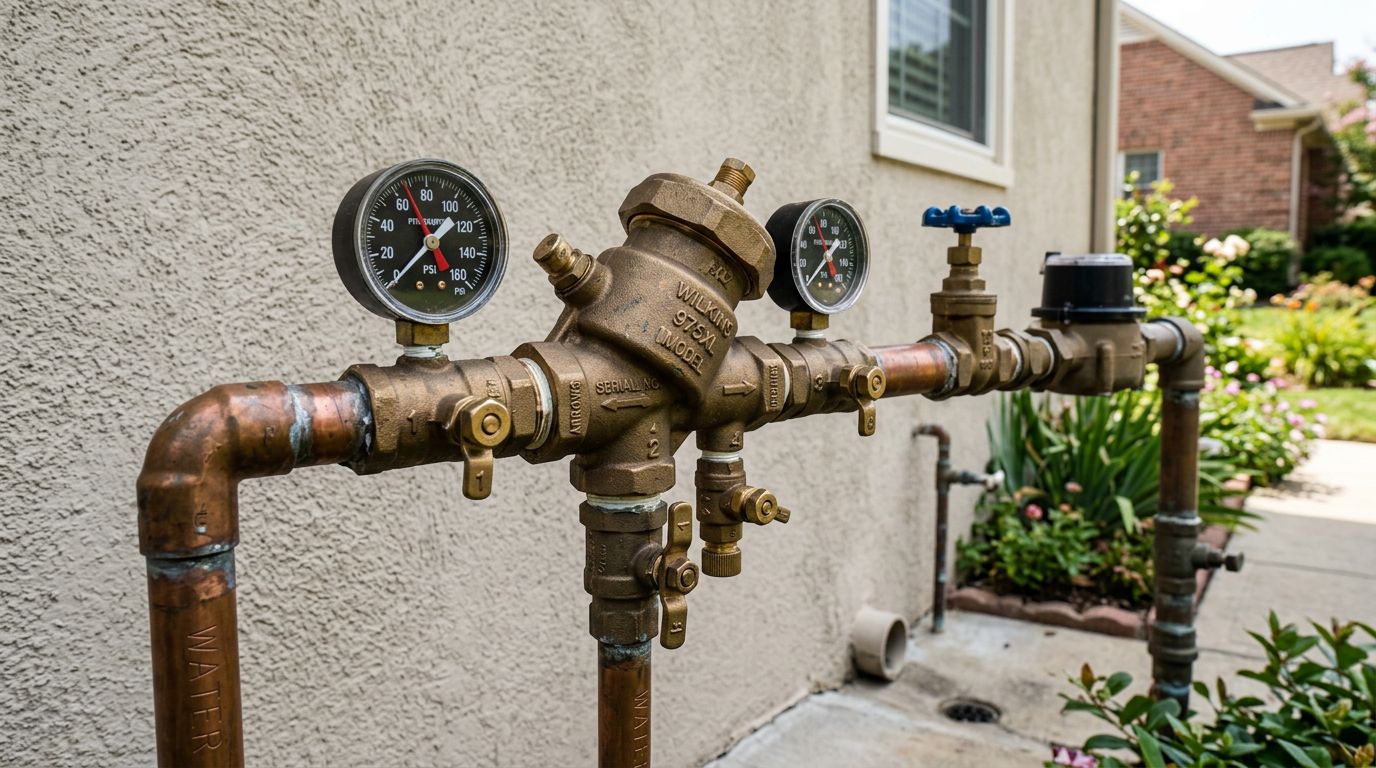
- Locate the device. We find your backflow assembly, which is often near the water meter or where the irrigation line connects.
- Notify anyone affected. Since water gets shut off for a few minutes, we make sure no one is caught off guard.
- Close the shutoff valves. This isolates the device so we can test it without interference from the rest of the system.
- Attach the test kit. We connect our calibrated gauge to the test cocks on the assembly.
- Measure the check valves. We verify that the internal checks hold pressure and seal properly.
- Test the relief valve. On applicable devices, we confirm the relief valve opens at the correct pressure.
- Record the readings. Every result gets documented for your records and for the water authority.
- Restore water service. We slowly reopen the valves and check for leaks before we finish.
The steps can vary slightly depending on the type of assembly. You can see a fuller breakdown of a home visit in our overview of the residential backflow testing process in Texas.
What Equipment and Tools Are Used During a Backflow Test?
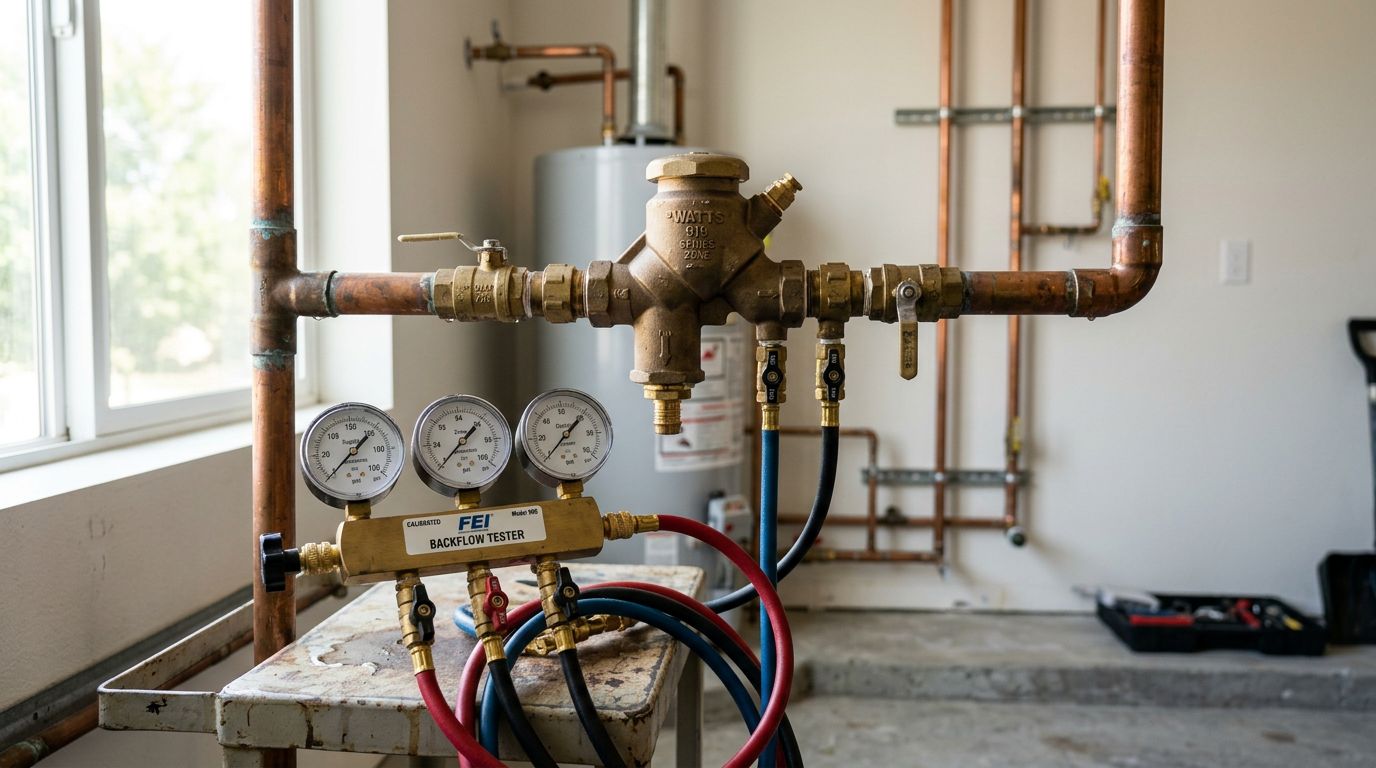
You cannot eyeball a backflow test. It takes SPECIALIZED equipment that measures water pressure with precision. The centerpiece is a test kit that reads how the valves inside your device respond. Every certified tester carries gear that has been calibrated so the readings are accurate. Here are the main tools we bring to the job.
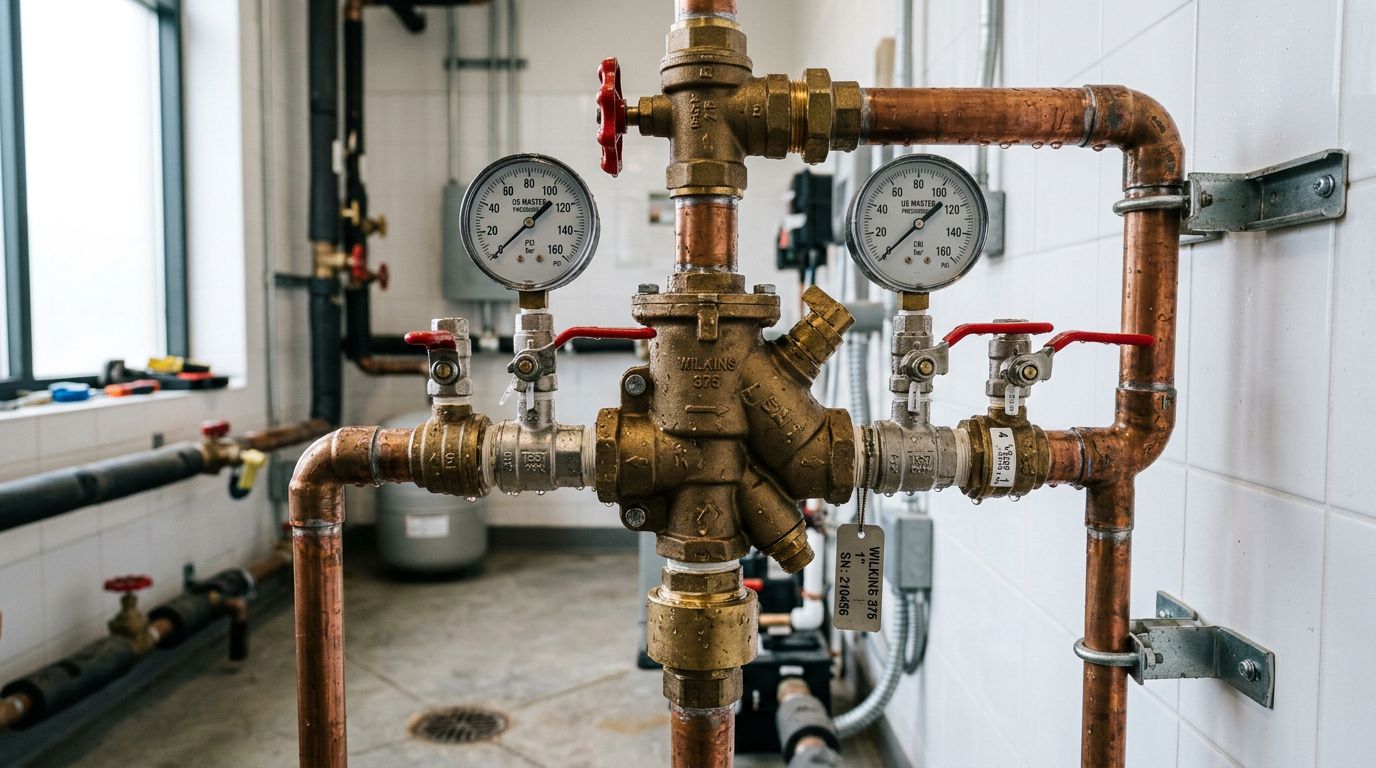
- Backflow test kit gauge. The heart of the test, this measures pressure differentials across the check valves.
- Test cock fittings and hoses. These connect our gauge to the small test ports on your assembly.
- Calibration records. Our gauges are calibrated regularly so the results hold up with the water authority.
- Wrenches and valve tools. Used to open test cocks and adjust shutoff valves without damaging them.
- Documentation forms. Paper or digital records to log the pass or fail results and submit them.
- Bucket or drain hose. To catch and manage water released during the test.
If you are curious about the broader service and what a professional visit looks like, we cover it on our main page about backflow testing in Texas.
How Long Does Backflow Testing Take and What Does It Cost?
One of the most common questions we hear is how long the test takes and what to budget for it. The good news is that backflow testing is FAST. Most tests wrap up in well under an hour, and the water is only off for a few minutes. Cost depends on the type of property and the number of devices being tested. Here is a closer look.
How Long Does It Take?
A single residential device usually takes 20 to 30 minutes from setup to cleanup. Commercial properties can take longer because they often have multiple assemblies to check. If everything passes, we are typically done quickly and your water is right back on.
What Affects the Cost?
The price varies based on how many devices you have, where they are located, and whether the property is residential or commercial. A home with a single irrigation backflow preventer is on the lower end. A business with several assemblies or a fire suppression system will cost more because there is more to test.
Are There Extra Fees?
If your device fails and needs repair, that is a separate cost from the test itself. Some water authorities also charge a small administrative fee to process the report. We always try to give you a clear picture up front so there are no surprises.
What Happens If Your Backflow Test Fails?
A failed test is not the end of the world. It simply means one or more parts inside the assembly are not sealing the way they should. This is actually WHY testing exists. Catching a worn or failing device before it lets contaminated water through is the whole point. When a test fails, here is what typically happens next.
- We identify the problem. The gauge readings tell us which valve or component is not holding.
- We explain your options. Sometimes the fix is a simple repair or replacement of an internal part.
- Repairs are performed. A worn seal, spring, or check valve is swapped out to restore proper function.
- Replacement may be needed. If the device is old or badly damaged, replacing it makes more sense than repairing it.
- The device is retested. After any work, we run the test again to confirm it now passes.
- Results are submitted. Once it passes, we document the fix and file the report with your water authority.
The important thing is not to panic. A failed test just means your device did its job by revealing a weakness that needs attention. We handle failures across the Austin, Round Rock, Cedar Park, and Georgetown areas all the time.
How Often Should Backflow Testing Be Performed?
Testing frequency depends on where you live and what kind of property you have. Most Central Texas water authorities require testing on a set schedule, and staying on top of it keeps you compliant and safe. Below is a general breakdown of how often testing is usually needed.
Residential Properties
Homes with irrigation systems or other backflow devices typically need testing ONCE a year. Many cities send an annual reminder, but it is smart to track the date yourself so you never fall behind. We serve homeowners throughout Austin, Jollyville, Pflugerville, and Leander with these yearly checks.
Commercial Properties
Businesses almost always fall under annual testing requirements, and some high-risk facilities may need it more often. Commercial setups often have multiple devices, so it helps to schedule them all at the same time. Our commercial backflow testing covers properties in San Marcos, Kyle, West Lake Hills, and Anderson Mill.
After Repairs or Installation
Any time a backflow device is installed, moved, or repaired, it should be tested right away. This confirms the new setup works before it is put into regular service. Never assume a fresh install is fine without a verifying test.
When Required by the City
Some water authorities have their own rules that go beyond the standard annual cycle. Fire hydrant inspections and customer service inspections may follow different timelines. We stay current on local requirements so you do not have to memorize them.
Conclusion
Backflow testing is a quick, straightforward process that protects the water you and your neighbors drink every day. We locate the device, measure its valves with a calibrated gauge, document the results, and submit them to your water authority. If something fails, we repair or replace the faulty part and retest until it passes. Most homes need this done once a year, and businesses follow similar or stricter schedules.
If you are due for a test or just want to make sure your property stays compliant, Safewater Backflow And Irrigation is ready to help across Austin and the surrounding communities. Keeping your water safe starts with a simple test, so reach out and let us take care of it for you.