
Residential vs Commercial Backflow Testing (Key Differences 2026)
When it comes to protecting your drinking water, backflow testing is one of those things most people never think about until they get a notice from the city. Here at Safewater Backflow And Irrigation, we handle both residential and commercial backflow testing across Austin and the surrounding areas. And one question we hear all the time is simple: what is the DIFFERENCE between testing a home and testing a business?
The short answer is that they are not the same. The devices are different. The rules are different. Even the schedules and costs can vary quite a bit. In this guide, we break down everything you need to know for 2026 so you can stay compliant and keep your water safe.
What Is Backflow Testing and Why Is It Required?
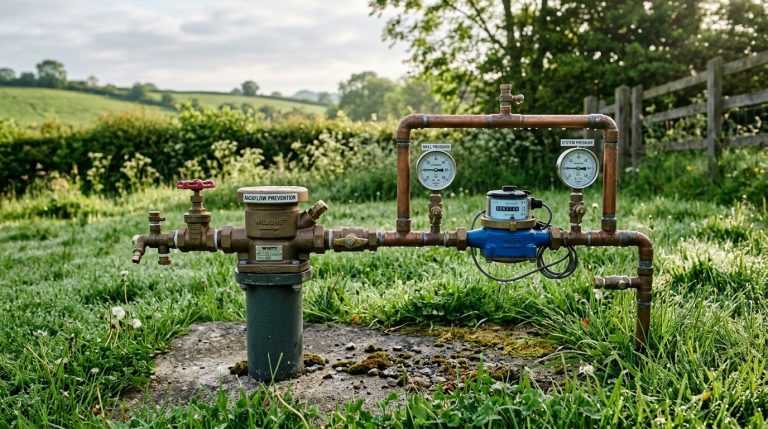
Backflow happens when water flows BACKWARD through your plumbing instead of the direction it should go. This can pull contaminants, chemicals, or dirty water into the clean water supply. Nobody wants fertilizer, pesticides, or worse ending up in their drinking glass. That is exactly why backflow prevention devices exist, and why they need to be tested regularly.
Backflow testing is a check performed by a certified tester to make sure your prevention device is working correctly. Most Texas cities require this by law. If your property has an irrigation system, a fire suppression system, or certain commercial fixtures, you almost certainly need a backflow assembly. And that assembly needs annual testing to prove it still stops water from reversing course.
- Protects public health by keeping contaminants out of the drinking water supply.
- Required by local water authorities in Austin and most surrounding cities.
- Verifies your device works before a problem ever happens.
- Prevents fines and shutoffs that can come from missing a required test.
- Gives you peace of mind that your water is safe for your family or customers.
Whether you own a home in Round Rock or run a restaurant in San Marcos, the reason for testing is the same. Clean water in, dirty water stays out. You can learn more about how the whole process works in Texas on our backflow testing in Texas resource.
Key Differences Between Residential and Commercial Backflow Testing
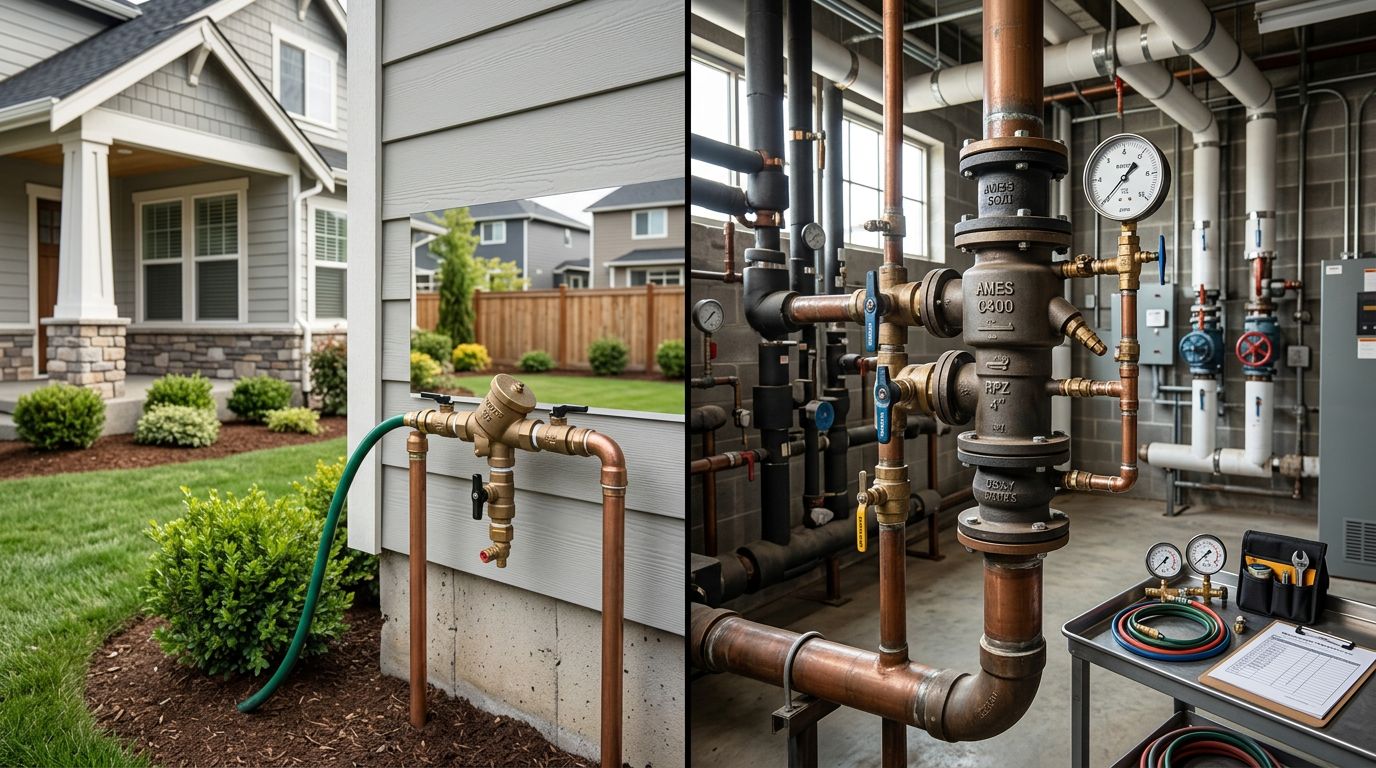
At a glance, both types of testing check the same core thing. But the details separate them in a big way. Homes usually have ONE simple device tied to an irrigation system. Commercial properties often have MULTIPLE devices, larger assemblies, and stricter oversight. Commercial systems also tend to carry a higher risk level, which means the rules around them are tighter.
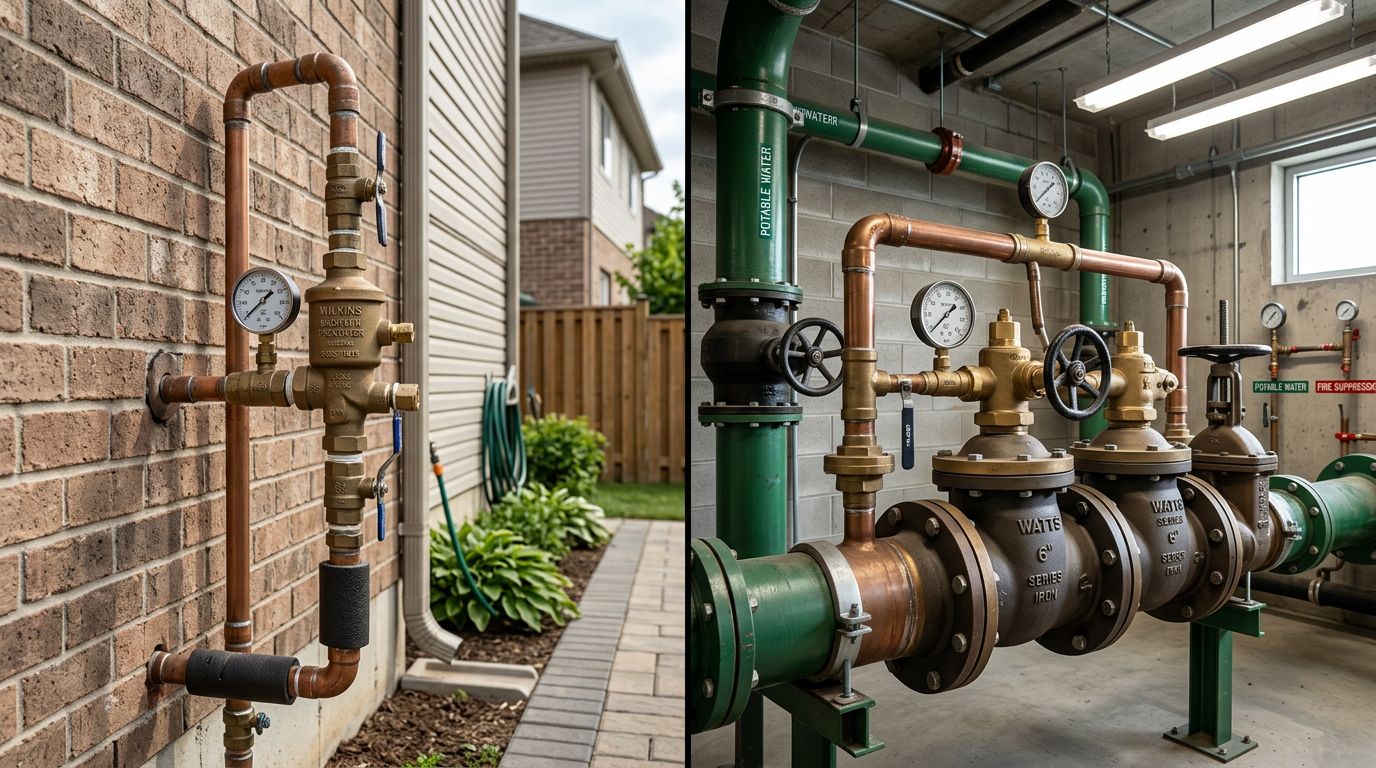
Here is a side by side look at how residential and commercial backflow testing compare.
| Factor | Residential | Commercial |
|---|---|---|
| Number of Devices | Usually one, tied to irrigation | Often several across the property |
| Device Size | Smaller, typically 3/4″ to 1″ | Larger, often 2″ and up |
| Risk Level | Lower hazard in most cases | Higher hazard, more contaminants |
| Complexity | Simple, quick test | More involved, may take longer |
| Documentation | Basic report to the city | Detailed records, sometimes multiple filings |
| Cost | Lower per device | Higher, scales with device count |
No matter which category you fall into, you can learn more about our full range of backflow testing services in Texas to see how the process applies to your property. If you want a deeper look at how we handle each side, we have detailed pages for our residential backflow testing process in Texas that walk homeowners through exactly what to expect. Commercial owners in Pflugerville or Cedar Park will find the scope is simply bigger and requires more planning.
How Often Do You Need Backflow Testing for Homes vs Businesses?
The most common rule across Austin and nearby cities is annual testing. That applies to both homes and businesses in most cases. But businesses can face MORE frequent testing depending on the type of operation and the hazard level involved. A medical facility or a factory may be held to stricter timelines than a small office.
Here is a general breakdown of testing frequency. Always check with your local water authority, since requirements can shift from city to city.
- Residential irrigation systems: Once per year is the standard in most areas.
- New device installation: Testing is required right after installation, whether home or business.
- Commercial properties: Annual testing at minimum, sometimes more often for high-hazard sites.
- Fire suppression systems: Annual testing, often with additional inspection needs.
- After repairs or replacement: A fresh test is needed to confirm the fix worked.
For businesses that run multiple locations, keeping track of test dates can get tricky. Our team helps commercial clients across Georgetown, Leander, and beyond stay on schedule. You can see how we manage larger jobs on our commercial backflow testing in Austin page.
How Much Does Backflow Testing Cost in 2026?
Cost is always a big question, and the honest answer is that it depends. The price is shaped by how many devices you have, how big they are, and how easy they are to reach. A single residential device is quick and affordable. A commercial property with several large assemblies naturally costs more. Below we break it down by category to give you a clearer picture.
Residential Backflow Testing Cost
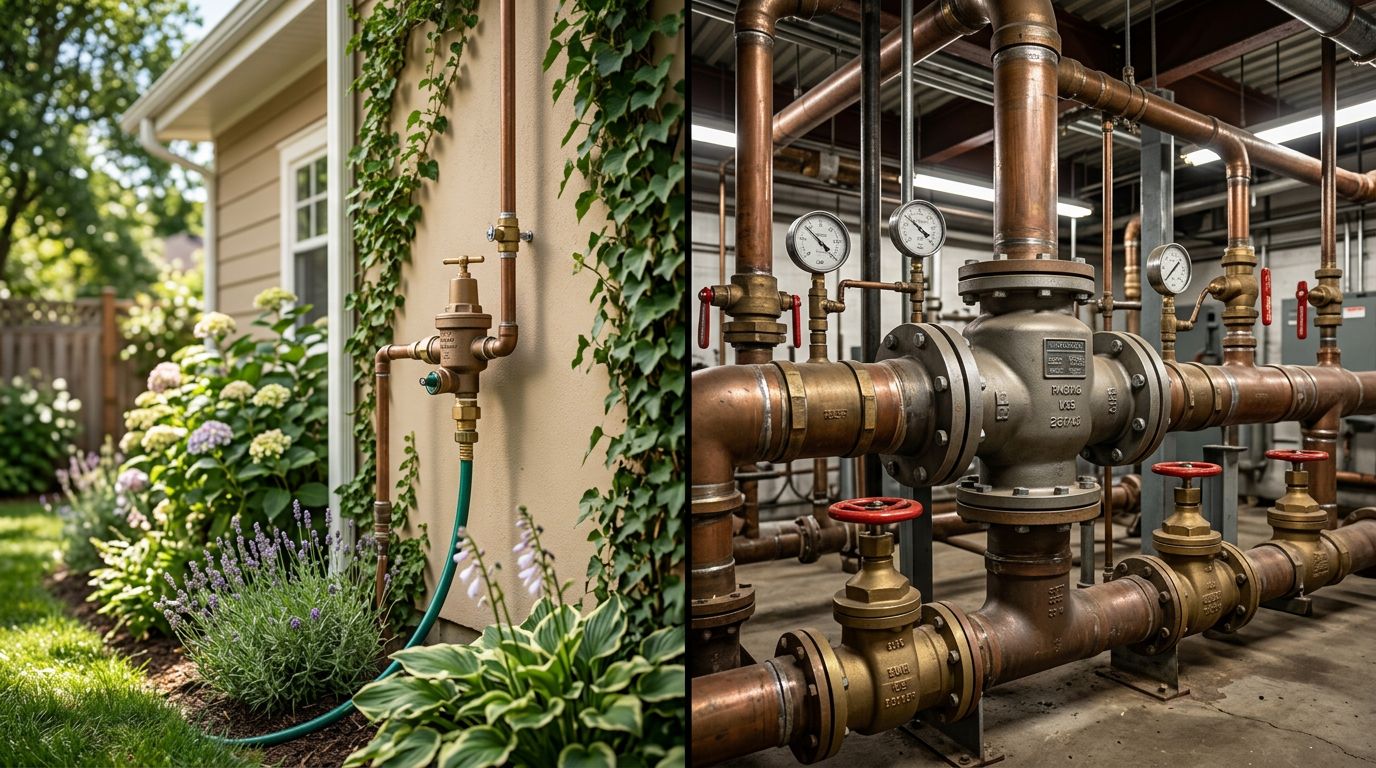
For most homes, backflow testing is a low-cost annual service. Since there is usually just one small device tied to an irrigation system, the test is fast. Homeowners in areas like Kyle or Anderson Mill can expect a straightforward flat rate for a single device. Any needed repairs would be quoted separately.
Commercial Backflow Testing Cost
Commercial pricing scales with the property. More devices mean more time and more paperwork. Larger assemblies also require different tools and more effort to test. Because of this, commercial testing costs more than residential, but the per-device rate often improves when multiple units are tested in one visit.
Factors That Affect Your Price
Several things can move the final number up or down. Being aware of these helps you avoid surprises.
- Number of devices being tested on the property.
- Size and type of each backflow assembly.
- Accessibility of the device and whether it is easy to reach.
- Repairs needed if the device fails the test.
- Location and travel within the greater Austin area.
What Backflow Prevention Devices Are Used in Residential and Commercial Systems?
Not all backflow devices are created equal. The type used depends on the hazard level and the application. Homes tend to use simpler assemblies, while commercial and high-risk sites use more robust ones. Here are the main types you will run into.
Pressure Vacuum Breaker (PVB)
This is a common choice for RESIDENTIAL irrigation systems. It is designed to prevent backflow in lower-hazard setups and is relatively simple to test. Many homes across West Lake Hills and Jollyville rely on this type for their sprinkler systems.
Double Check Valve Assembly (DCVA)
The double check assembly is used in both residential and commercial applications where the hazard is moderate. It uses two check valves working together for added protection. It is a versatile device found in many irrigation and fire line setups.
Reduced Pressure Zone Assembly (RPZ)
The RPZ is the heavy hitter, often required for HIGH-HAZARD commercial properties. It offers the strongest protection and is common in industrial, medical, and food service settings. Because of its complexity, it needs careful and precise testing.
Atmospheric Vacuum Breaker (AVB)
This is a simpler, lower-cost device used in certain low-risk situations. It has limitations on how it can be installed, but it serves its purpose in the right application. It is more commonly seen on smaller residential setups.
How to Choose a Certified Backflow Testing Provider
Picking the right tester matters more than most people realize. A backflow test has to be done by someone who is CERTIFIED and who knows the local rules. A poor test or missing paperwork can leave you out of compliance without even knowing it. Here is how to choose a provider you can trust for your home or business.
- Confirm certification. Make sure the tester holds a valid backflow certification recognized in Texas.
- Check local experience. A provider familiar with Austin area cities knows the specific filing requirements.
- Ask about both services. A company that handles residential AND commercial work can grow with your needs.
- Look for clear pricing. Honest, upfront quotes prevent surprises on your bill.
- Review their reporting process. Proper documentation sent to the city is a must for compliance.
- Read customer feedback. Reviews tell you a lot about reliability and professionalism.
- Confirm repair capability. If a device fails, you want someone who can fix it too.
We serve homeowners and businesses across Austin, Round Rock, San Marcos, Pflugerville, Cedar Park, Leander, Georgetown, and more. From irrigation checks to fire hydrant inspections and customer service inspections, our goal is to keep your water safe and your paperwork in order.
Conclusion
Residential and commercial backflow testing share the same mission, but they differ in device count, size, complexity, cost, and how often testing is needed. Homes usually deal with a single small device and a quick annual test. Businesses face larger assemblies, higher hazard levels, and stricter oversight. Knowing these differences helps you plan ahead and stay compliant in 2026.
Whether you own a home with an irrigation system or manage a commercial property with several devices, Safewater Backflow And Irrigation is ready to help you stay protected and up to code. Reach out to schedule your backflow testing and keep your water safe all year long.