
Commercial Irrigation System Assessment (Complete 2026 Guide)
When you run a commercial property in the Austin area, your irrigation system does a lot of heavy lifting. A thorough commercial irrigation system assessment tells you exactly how that system is performing, where it wastes water, and what needs fixing before small problems turn into big, expensive ones. We work with property managers and business owners every day, and we know that a good assessment saves money and headaches.
This guide walks you through what an assessment covers, how it works, what it costs, and how often you should schedule one. Whether you manage a retail center, office park, or municipal site, this is the practical breakdown you need for 2026.
What Is a Commercial Irrigation System Assessment
A commercial irrigation system assessment is a top-to-bottom review of your entire watering setup. It looks at every part that moves, sprays, or controls water across your landscape. The goal is simple. Find out if your system delivers water efficiently, safely, and in compliance with local rules. For larger properties, that also means checking how the irrigation connects to your potable water supply so contamination never becomes a risk.
Unlike a quick visual walk-through, a real assessment digs into pressure, coverage, and equipment condition. Here is what a proper assessment typically includes:
- A full inventory of zones, valves, and controllers
- Testing water pressure and flow at multiple points
- Checking sprinkler head coverage and spacing
- Inspecting for leaks, broken lines, and clogged nozzles
- Reviewing backflow prevention devices for proper function
- Evaluating the controller programming and scheduling
- Documenting water waste and efficiency issues
- Noting any code or compliance concerns
How to Conduct a Commercial Irrigation System Audit
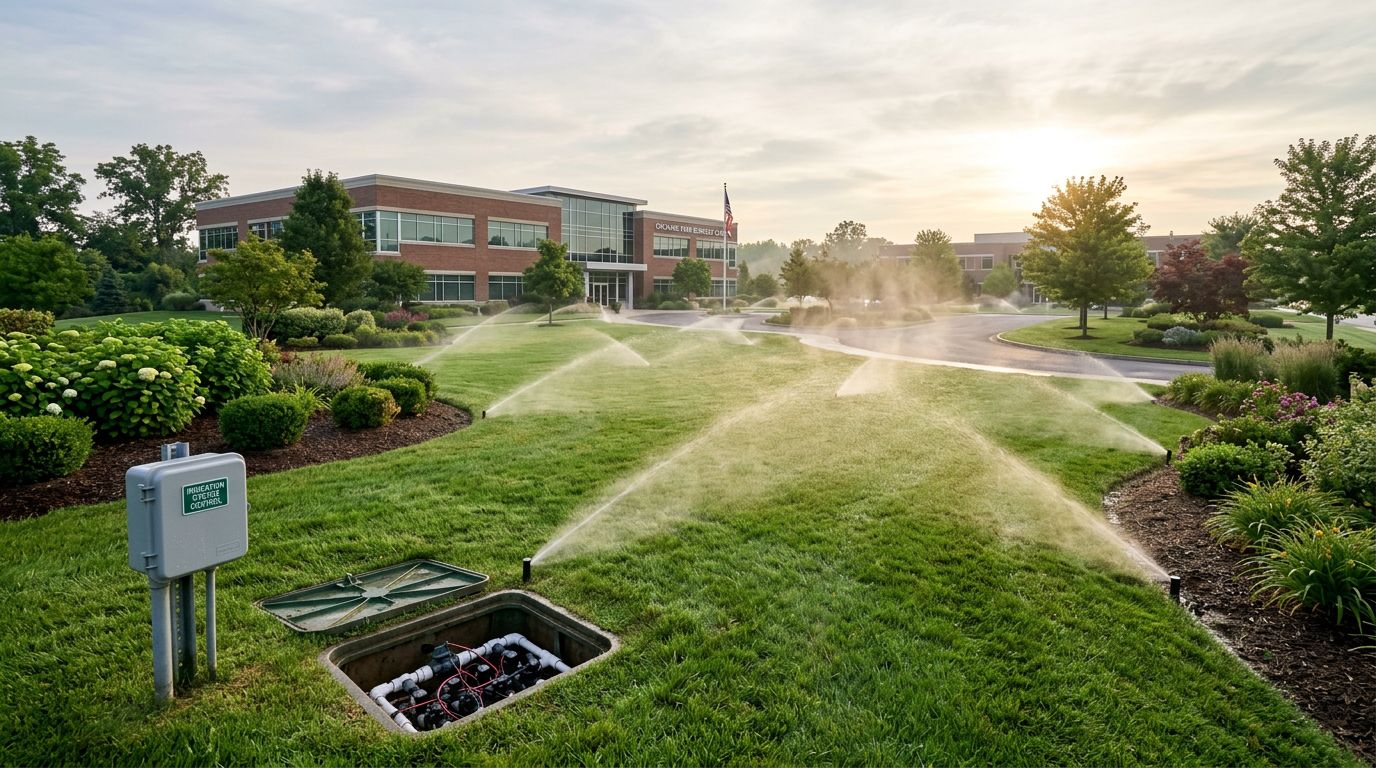
An irrigation audit follows a clear sequence. Skipping steps leads to missed problems, so we always move through the system in order. If you want to understand what a professional visit looks like, our approach to a commercial facility assessment in Austin follows this same kind of structured process. Here is how a complete audit generally works.
- Review the site plans. We start with any existing irrigation maps or as-built drawings. This shows us zone layouts and where key components sit.
- Locate the controller and main components. We identify the controller, main shutoff, and backflow device before anything else.
- Run each zone one at a time. Activating zones individually lets us watch every sprinkler head in action.
- Measure pressure and flow. We check that each zone gets enough pressure without over-pressurizing the lines.
- Inspect heads and coverage. We look for dry spots, overspray, and heads spraying sidewalks or buildings.
- Check for leaks and breaks. Wet spots, pooling, and low pressure often point to underground issues.
- Test the backflow assembly. This protects your drinking water and is often required by local code.
- Evaluate the controller schedule. We review run times, seasonal settings, and any smart features.
- Document everything. We record findings with notes and photos so you have a clear record.
- Provide recommendations. Finally, we give you a prioritized list of repairs and improvements.
Key Components to Inspect During an Irrigation Assessment
Every irrigation system is built from a handful of core parts. When ONE fails, the whole system can suffer. Here are the components that deserve close attention during any assessment.
Controller and Timer
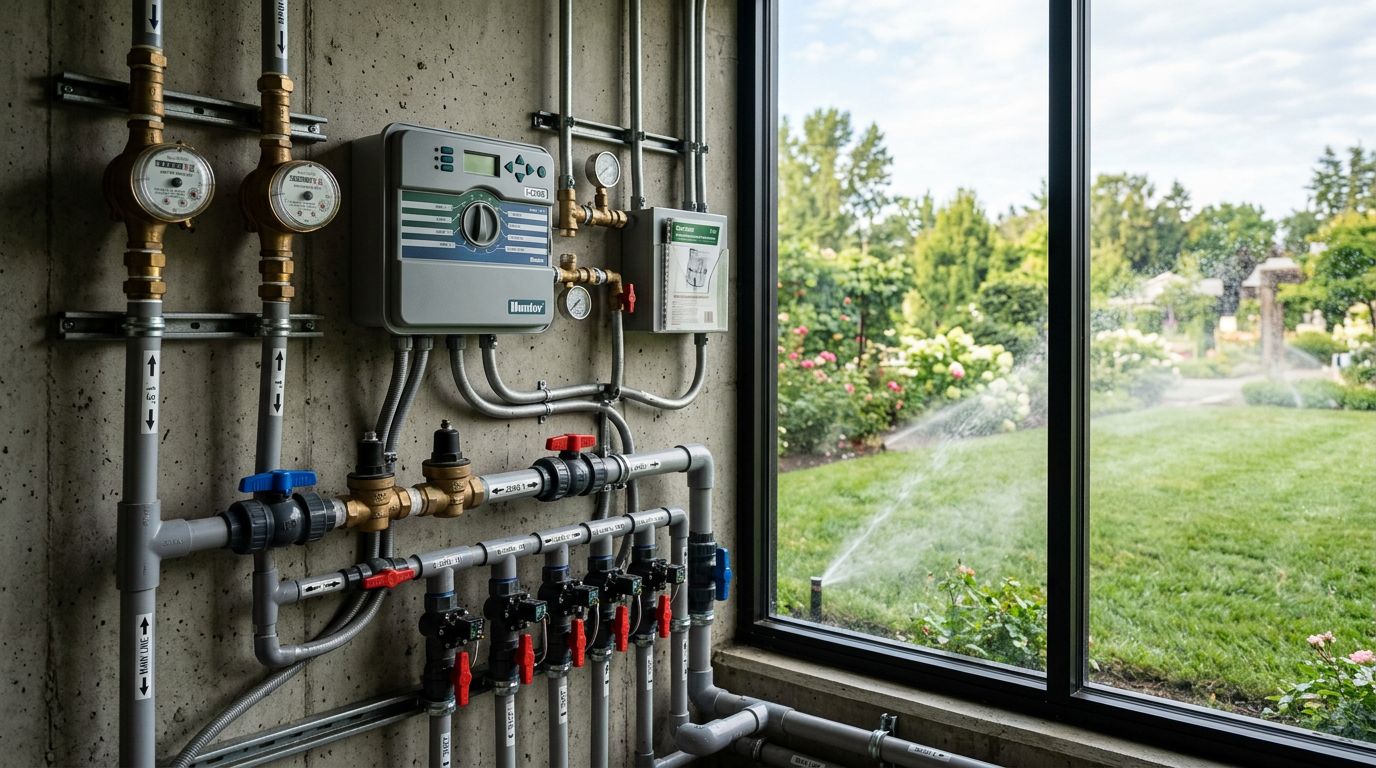
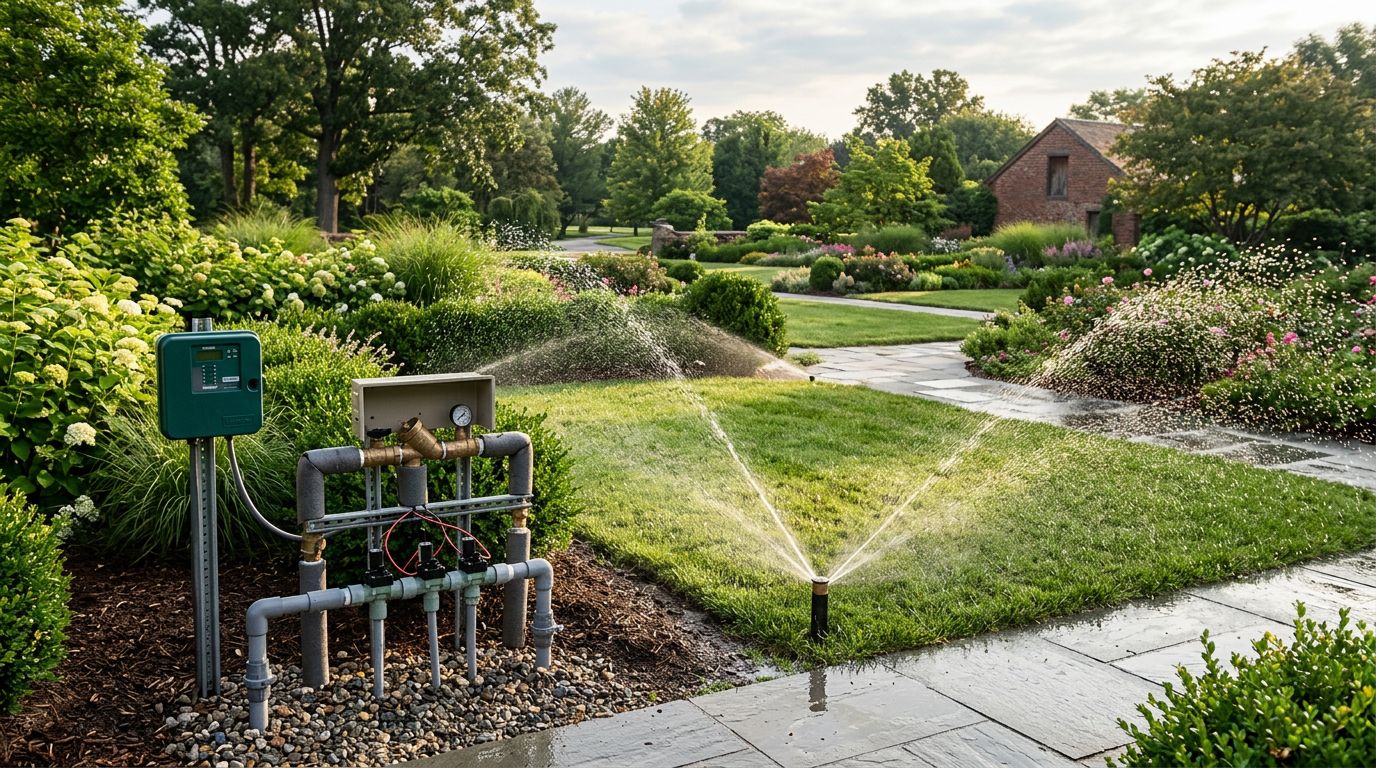
The controller is the brain of the system. We check that it powers on, holds its program, and follows the correct schedule. Outdated or misprogrammed controllers waste huge amounts of water. Smart controllers that adjust for weather can help, but only if they are set up right.
Backflow Prevention Assembly
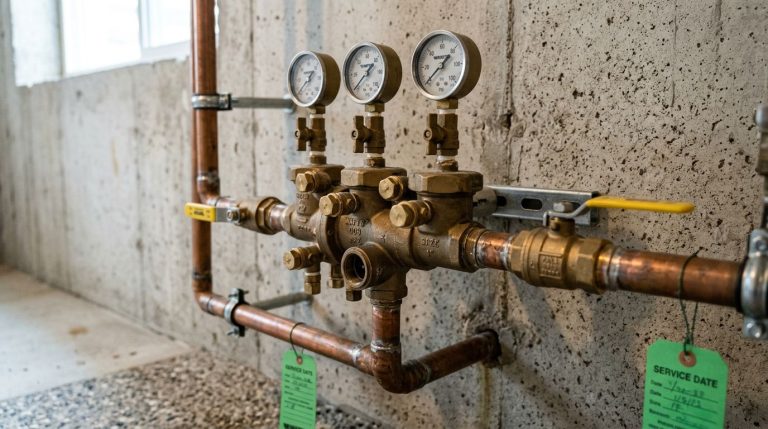
This device keeps irrigation water from flowing back into your clean water supply. It is one of the most important safety components in any commercial system. We inspect it for leaks, proper installation, and correct operation. In many areas around Austin, testing this assembly is a legal requirement.
Valves and Zones
Valves open and close to send water to each zone. Stuck or leaking valves cause zones to run when they should not or fail to run at all. We test each valve to confirm it opens fully and shuts off cleanly.
Sprinkler Heads and Nozzles
Heads take the most abuse. Mowers, foot traffic, and weather break them constantly. We look for cracked heads, clogged nozzles, tilted risers, and mismatched heads within a single zone. Mismatched heads create uneven watering fast.
Pipes and Fittings
Buried lines and fittings can crack or separate over time. We watch for pressure drops, soggy soil, and unexplained water use that point to hidden leaks.
Pressure and Flow
Too much pressure causes misting and waste. Too little leaves dry patches. We measure both to make sure each zone operates in the right range.
How Much Does a Commercial Irrigation Assessment Cost
Cost depends on the size and complexity of your property. A small commercial lot with a few zones is far quicker to assess than a sprawling campus with dozens of zones and multiple controllers. Because of that, pricing is best quoted after we understand your site. For properties in the northern suburbs, our commercial facility irrigation inspection in Round Rock is scoped around the actual layout and needs of each building. Here are the main factors that influence what an assessment costs.
- Number of zones. More zones mean more time and more components to test.
- Property size. Larger sites take longer to walk and inspect.
- System age. Older systems often need more careful examination.
- Backflow testing. Required testing may be bundled or priced separately.
- Accessibility. Hard-to-reach valves and controllers add time.
- Documentation needs. Detailed reports for compliance may affect scope.
- Repairs found. The assessment itself is separate from any repair work.
The best move is to get a quote based on your specific property. That way you pay for exactly what your system requires and nothing more.
Common Irrigation System Problems Found During Assessments
After doing this work across the Austin region, we see the same issues over and over. The good news is that most of them are fixable once you know they exist. If you manage a site in the western suburbs, our commercial irrigation inspection in Leander routinely uncovers these exact problems before they get worse. Here are the ones we find most often.
- Broken or missing sprinkler heads. These waste water and leave dry spots.
- Clogged nozzles. Dirt and mineral buildup block proper spray patterns.
- Overspray onto pavement and buildings. This soaks sidewalks instead of grass.
- Leaking valves. Water seeps out even when zones are supposedly off.
- Hidden underground leaks. These drive up bills without any visible sign at first.
- Poor controller programming. Systems run too long, too often, or at the wrong time of day.
- Mismatched heads in one zone. This causes uneven coverage and dead patches.
- Failing backflow devices. A real safety and compliance concern.
- Pressure problems. Misting from high pressure or weak spray from low pressure.
- Outdated equipment. Older parts that no longer meet efficiency standards.
How Often Should Commercial Irrigation Systems Be Assessed
Regular assessments keep your system healthy and your water bills predictable. A system that runs unchecked for years almost always develops waste and wear. For most commercial properties in the Austin area, a consistent schedule makes the most sense. Here is a general guide for how often to assess.
- Full assessment once a year. An annual review catches wear before it becomes costly.
- Seasonal check-ups. A spring start-up and fall shutdown help match watering to weather.
- After major landscaping work. New plantings or construction often disturb irrigation lines.
- When water bills spike. A sudden jump usually signals a leak or malfunction.
- Backflow testing per local rules. Many jurisdictions require annual testing for these devices.
- After extreme weather. Hard freezes and storms can damage components fast.
Sticking to a routine schedule means fewer surprises and a system that performs the way it should all year long. Properties we serve across Jollyville, Cedar Park, Georgetown, Pflugerville, Kyle, San Marcos, Leander, Anderson Mill, Round Rock, and West Lake Hills all benefit from staying ahead of problems instead of reacting to them.
Conclusion
A commercial irrigation system assessment is one of the smartest investments a property manager can make. It reveals hidden leaks, corrects wasteful programming, confirms your backflow protection works, and keeps your landscape looking sharp. Done regularly, it saves water, money, and stress. The steps are straightforward. Review the system, test every zone, inspect the key components, and act on the findings.
If you own or manage commercial property in Austin or the surrounding communities, now is a great time to schedule an assessment and make sure your irrigation system is ready for the year ahead. We are here to help you protect your property and your water supply with a thorough, professional review.