
Commercial Backflow Testing Frequency (Compliance Guide 2026)
If you run a business in Austin, backflow testing is one of those tasks that quietly sits on your compliance checklist until a deadline sneaks up on you. Understanding your commercial backflow testing frequency is the key to staying on the right side of local water regulations and protecting your property from costly surprises. At Safewater Backflow And Irrigation, we help business owners across the Austin area keep their systems tested, documented, and compliant.
This 2026 guide breaks down how often testing is required, what affects your schedule, who handles it, and what happens if you miss a deadline. Let’s get into it.
How Often Is Commercial Backflow Testing Required?
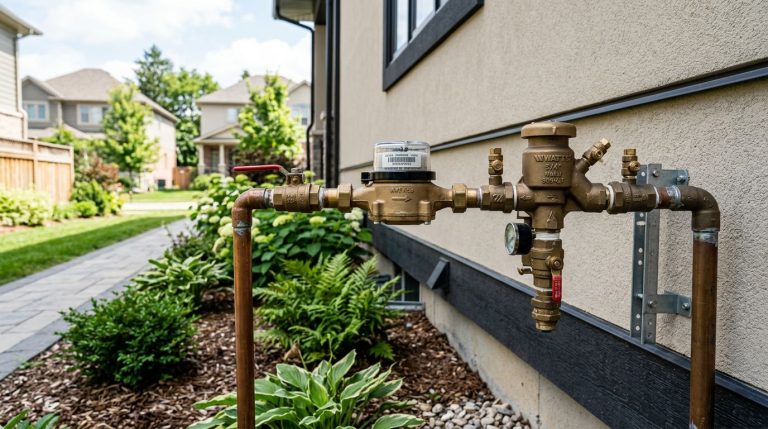
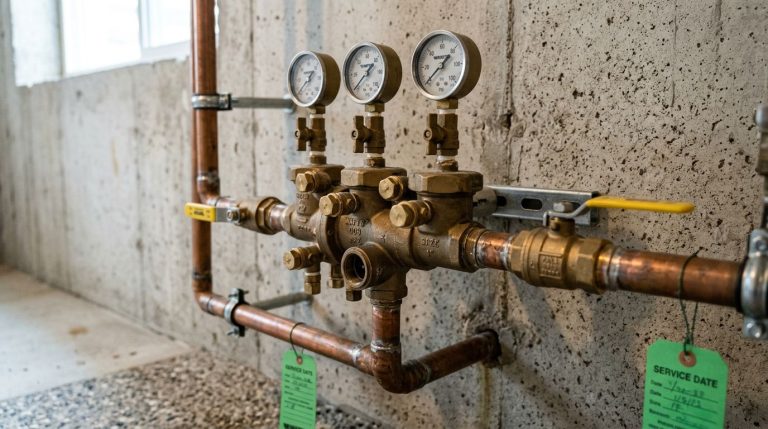
For most commercial properties in Texas, backflow testing is required ANNUALLY. That once-a-year schedule is the standard set by state rules and local water authorities. The reason is simple. Backflow preventers are mechanical devices, and over time their internal parts wear out. A yearly test confirms the assembly is still doing its job of keeping contaminated water from flowing backward into the public drinking supply.
Some businesses need testing more often than once a year. It depends on the level of hazard your operation presents and what your local water provider requires. Here is a quick look at typical testing intervals for commercial settings.
- Annual testing – The baseline requirement for most commercial and irrigation backflow assemblies.
- Semi-annual testing – Required for higher-risk facilities like medical buildings, labs, or chemical handling sites.
- After installation – A new backflow preventer must be tested right after it is installed.
- After repair or replacement – Any time a device is serviced or swapped out, a fresh test is needed.
- After relocation – Moving an assembly triggers a required re-test.
If you are unsure which category your property falls into, our team can review your setup. You can learn more about how our process works with backflow testing across Texas and the specific rules that apply to different property types.
What Factors Affect Backflow Testing Frequency for Businesses?
Not every business follows the same schedule. Several factors push some properties into more frequent testing while others stay on the standard annual cycle. Here are the main things that shape your testing frequency.
Level of Hazard on Your Property
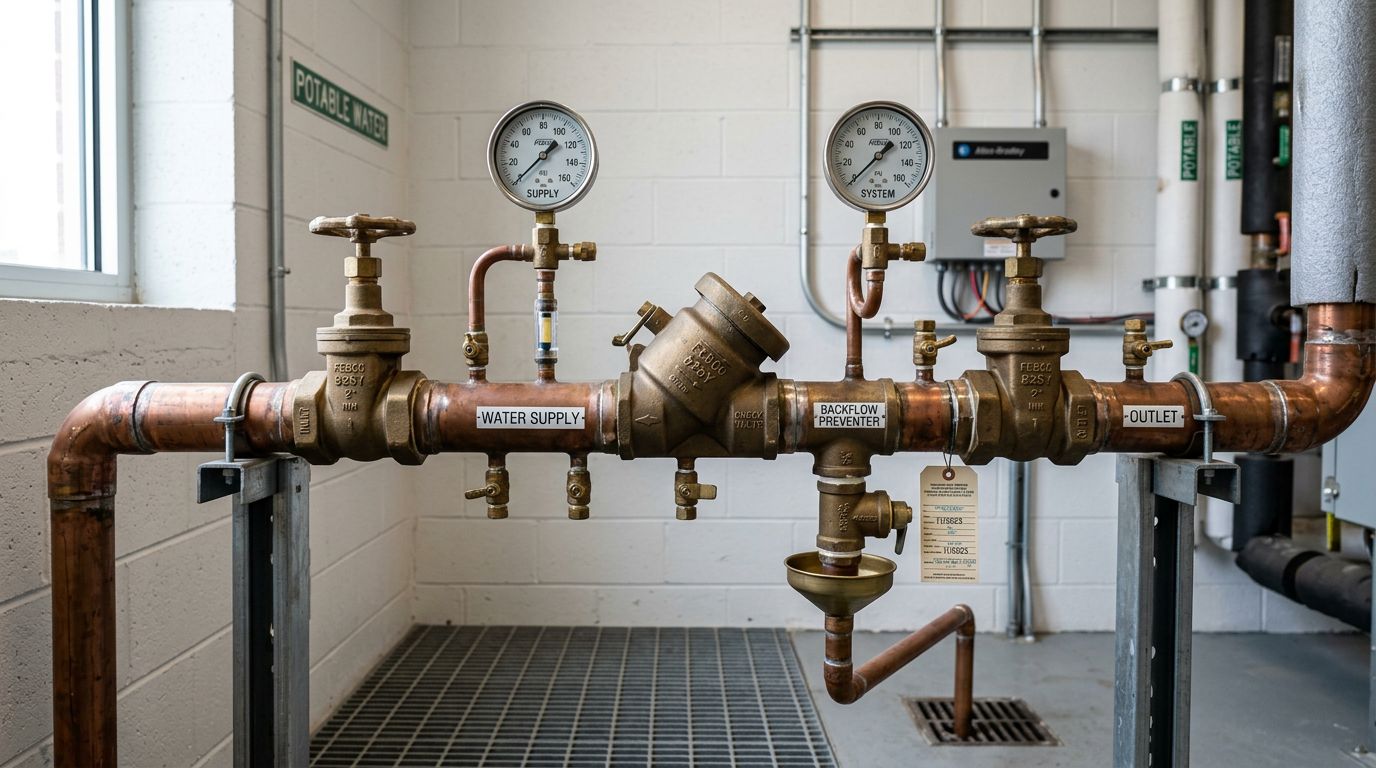
Water systems are classified by risk. A property that handles chemicals, medical fluids, or industrial processes is considered HIGH hazard. These sites often require more frequent testing because a backflow event could cause serious contamination. A standard office building with basic irrigation usually sits in the lower hazard category.
Local Water Authority Rules
Each city and water district in the Austin region can set its own requirements. What applies in Round Rock might differ slightly from Kyle or Georgetown. Your local provider ultimately decides how often you must submit test reports, so it pays to know their exact rules.
Type of Backflow Assembly Installed
Different devices carry different testing needs. A reduced pressure zone assembly protects against high hazards and is often watched more closely than a simpler double check valve. The device type on your property influences both frequency and the level of scrutiny.
Property Use and Occupancy Changes
If your building changes hands or shifts to a new use, your testing requirements can change too. A space that becomes a restaurant, salon, or medical office may suddenly need a more rigorous testing schedule than it had before.
Fire Suppression Systems
Buildings with fire sprinkler systems and fire hydrants often have their own backflow assemblies. These require regular inspection and testing to keep the fire line separated from the potable supply. Our team also handles fire hydrant inspection to keep these systems in check.
Who Is Responsible for Scheduling Commercial Backflow Tests?
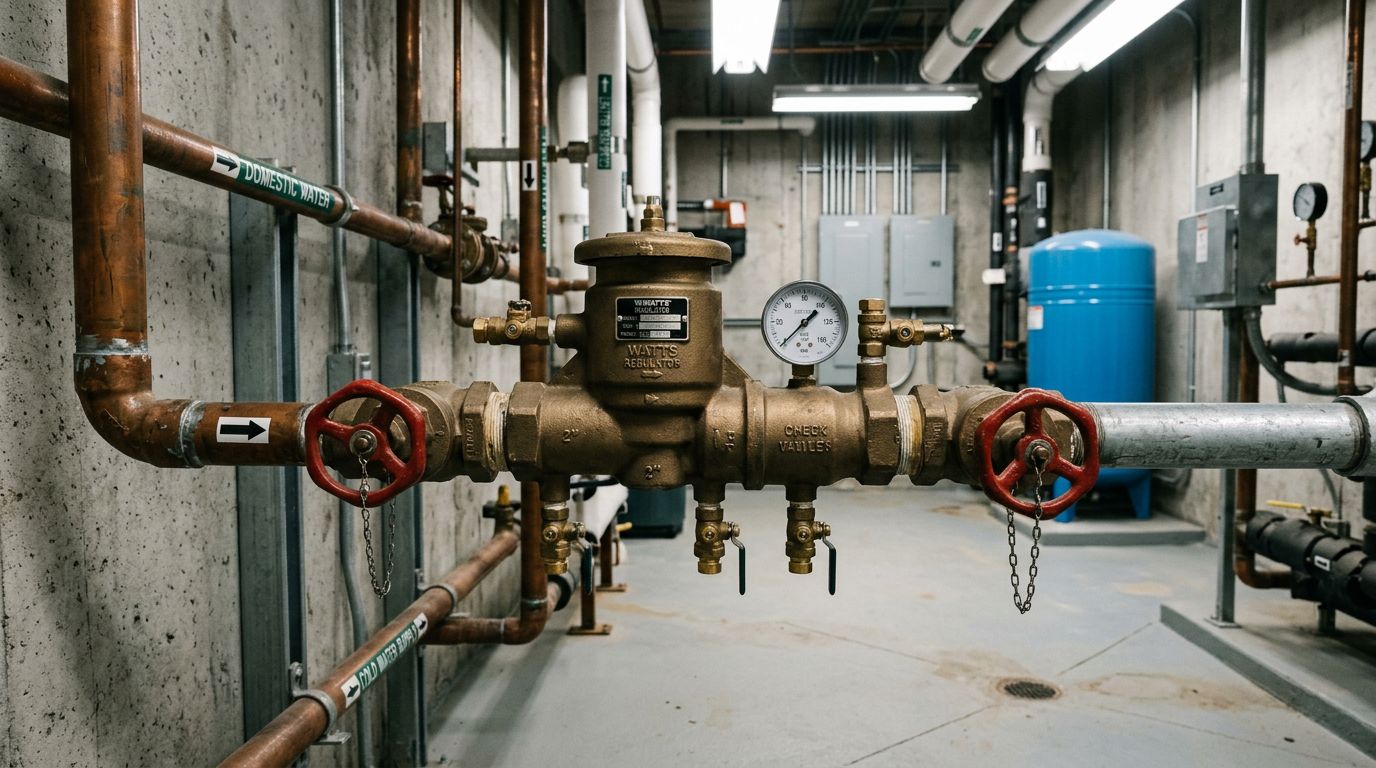
The responsibility for scheduling and paying for backflow testing almost always falls on the property owner or the business operator. Even if a tenant uses the space, the ultimate legal duty usually stays with the owner unless a lease says otherwise. The water authority sends notices, but it is up to YOU to act on them. Here is how the responsibility typically breaks down and what steps to follow.
- Property owner – Holds primary responsibility for keeping backflow assemblies tested and compliant.
- Business or tenant – May take on testing duties if the lease assigns that responsibility to them.
- Property manager – Often coordinates scheduling for multi-tenant or commercial buildings.
- Certified tester – Performs the actual test and submits the report to the water authority.
- Water provider – Sends reminder notices and tracks whether reports arrive on time.
We make this easier by handling the scheduling and paperwork for our clients. Our commercial backflow testing in Austin service takes the guesswork out of who does what, so nothing slips through the cracks.
What Are the Penalties for Missing a Backflow Test Deadline?
Missing a backflow test deadline is not something to shrug off. Water authorities take these rules seriously because the goal is protecting public drinking water. When a test report is late or missing, the consequences can escalate quickly. Here are the penalties businesses commonly face.
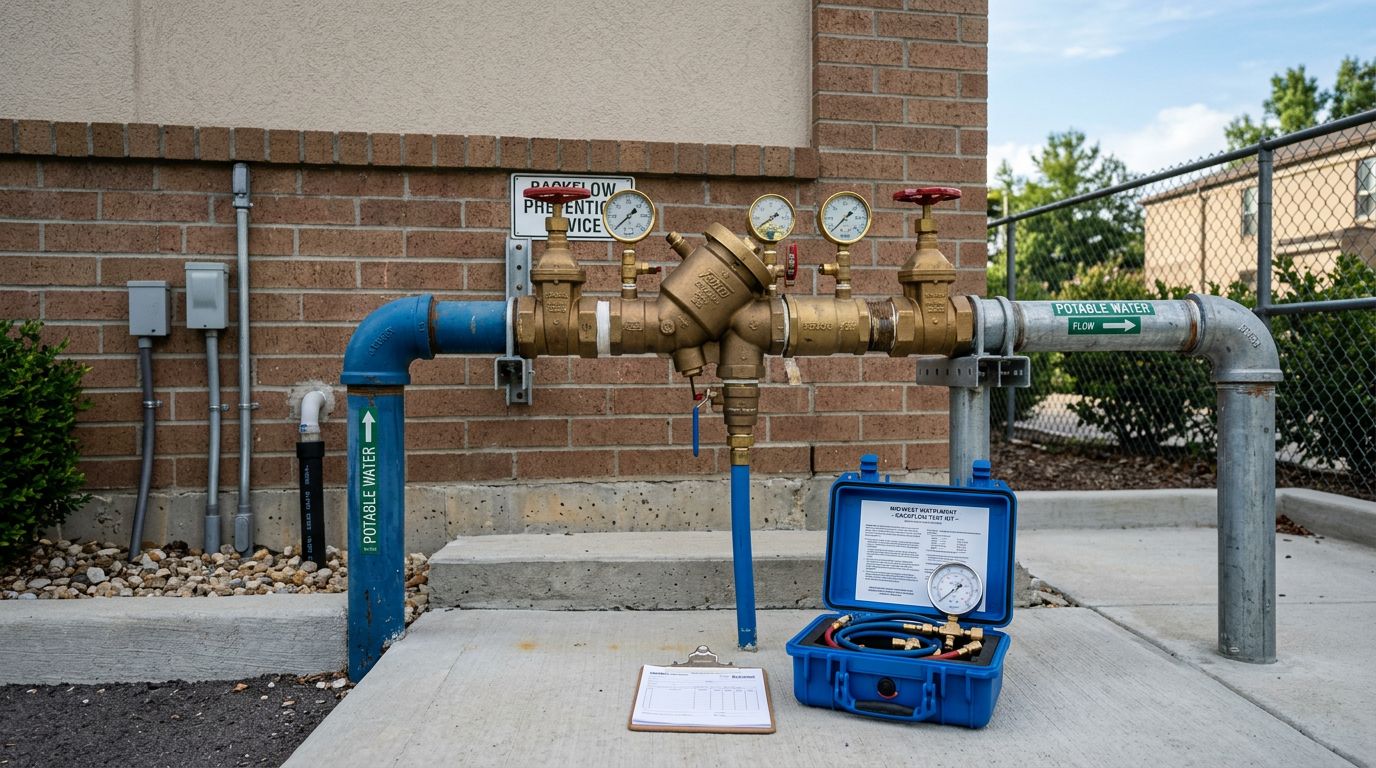
- Written violation notices – The first step is usually a formal warning with a deadline to fix the issue.
- Fines and fees – Late compliance can trigger monetary penalties that add up over time.
- Water service shutoff – In serious cases, the provider can turn off your water until testing is completed.
- Disrupted operations – A shutoff means your business may not be able to operate at all.
- Reinstatement charges – Getting service restored often comes with extra fees on top of the original cost.
- Liability exposure – If a backflow event causes contamination, an out-of-compliance property owner may face bigger legal problems.
The good news is that these penalties are entirely avoidable. Staying on schedule keeps you clear of fines and shutoffs. It also helps you understand how backflow preventers protect drinking water, which is the whole reason these rules exist in the first place.
How Much Does Commercial Backflow Testing Cost in 2026?
Cost is one of the first questions business owners ask, and it is a fair one. Commercial backflow testing pricing varies based on the number of devices, their size, and how easy they are to access. A single small assembly costs less than a large industrial setup with multiple devices. Below are the main factors that shape your total cost.
- Number of assemblies – More devices on your property means more testing time and a higher total.
- Device size and type – Larger and more complex assemblies take longer to test.
- Accessibility – Devices in tight or hard-to-reach spots may require extra labor.
- Repairs needed – If a test reveals a failing part, repair costs are separate from the test fee.
- Reporting and filing – Submitting the report to your water authority is often included but can vary by provider.
- Location – Prices can differ slightly between cities like Austin, Cedar Park, Leander, and Pflugerville.
We recommend getting a clear quote before scheduling so there are no surprises. A straightforward annual test for a small commercial property is usually affordable, especially when you compare it to the fines and shutoff fees that come with missing a deadline.
How to Stay Compliant with Backflow Testing Regulations
Staying compliant is mostly about staying ORGANIZED. When you know your deadlines and keep good records, the whole process becomes routine instead of stressful. Follow these steps to keep your business in good standing year after year.
- Know your deadline – Mark your annual test date on a calendar and set a reminder a month ahead.
- Identify every assembly – Make sure you know how many backflow preventers are on your property and where they are.
- Hire a certified tester – Only a licensed tester can perform the test and file a valid report.
- Keep copies of reports – Save every test result so you have proof of compliance if the water authority asks.
- Act on notices fast – When your provider sends a reminder, schedule the test right away instead of waiting.
- Repair promptly – If a device fails, get it fixed and re-tested before the deadline passes.
- Build a recurring schedule – Set up your testing on a regular cycle so it happens automatically each year.
We serve business owners throughout the region, including Jollyville, Anderson Mill, San Marcos, and West Lake Hills. Building a repeat schedule with a trusted tester means you never have to scramble at the last minute.
Conclusion
Commercial backflow testing is required annually for most Austin businesses, with higher-risk properties often needing it more often. The property owner usually carries the responsibility, and missing a deadline can lead to fines, water shutoffs, and liability. Costs depend on the number and type of devices, but staying compliant is always cheaper than the penalties. The best approach is to know your deadline, hire a certified tester, and keep good records.
At Safewater Backflow And Irrigation, we help commercial property owners across the Austin area stay compliant with confidence. Reach out today to schedule your test and keep your business protected for 2026 and beyond.