
Backflow Testing Equipment: Essential Tools Guide (2026)
When it comes to protecting clean drinking water, the right gear makes all the difference. At Safewater Backflow And Irrigation, we know that quality backflow testing equipment is the backbone of every accurate inspection. Whether we are testing a home in Cedar Park or a commercial building in downtown Austin, the tools we carry determine how reliable our results are.
In this guide, we break down the essential tools every technician needs in 2026. We cover what the equipment does, how to pick the right kit, and how to keep your gear accurate for years. Let us dig in.
What Is Backflow Testing Equipment and How Does It Work
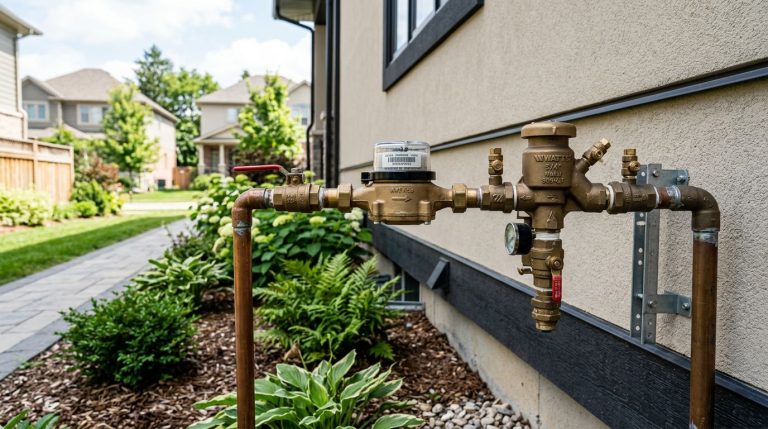
Backflow testing equipment is a set of specialized tools used to check whether a backflow prevention assembly is working correctly. The goal is simple. We want to confirm that water flows in ONE direction only, so contaminated water never sneaks back into the clean supply.
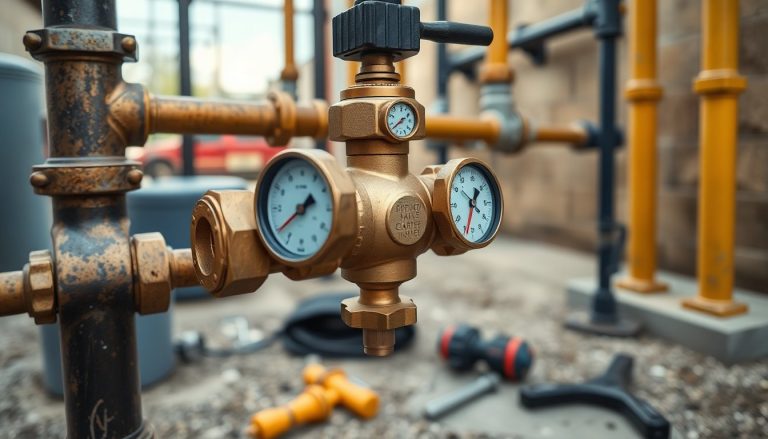
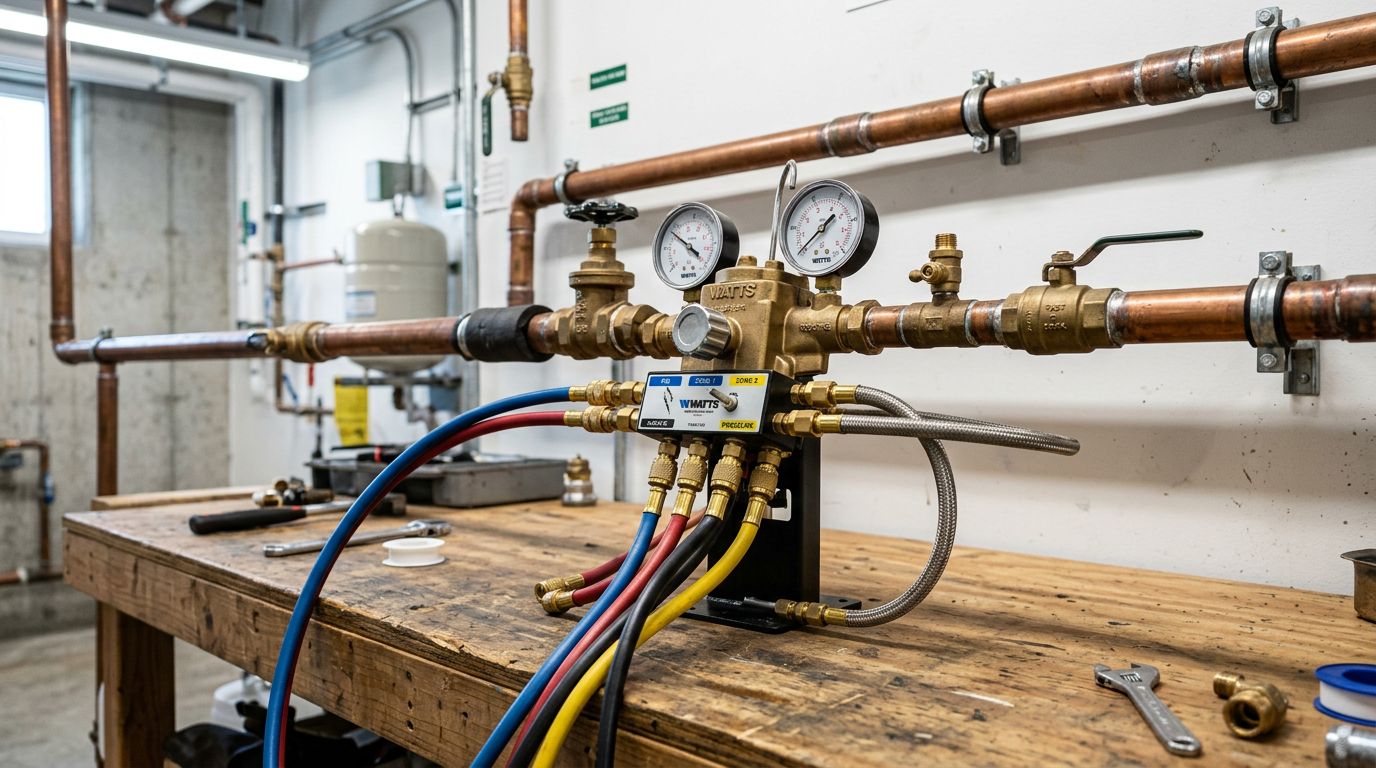
The core of most kits is a differential pressure gauge. This gauge measures tiny changes in water pressure across the check valves inside a backflow preventer. When we open and close the test cocks in a specific order, the gauge tells us if the internal valves are holding tight. If pressure drops when it should not, the assembly has a leak or a worn part. Understanding how backflow preventers protect drinking water helps explain why these readings matter so much.
- Differential pressure gauge: Reads pressure differences across check valves.
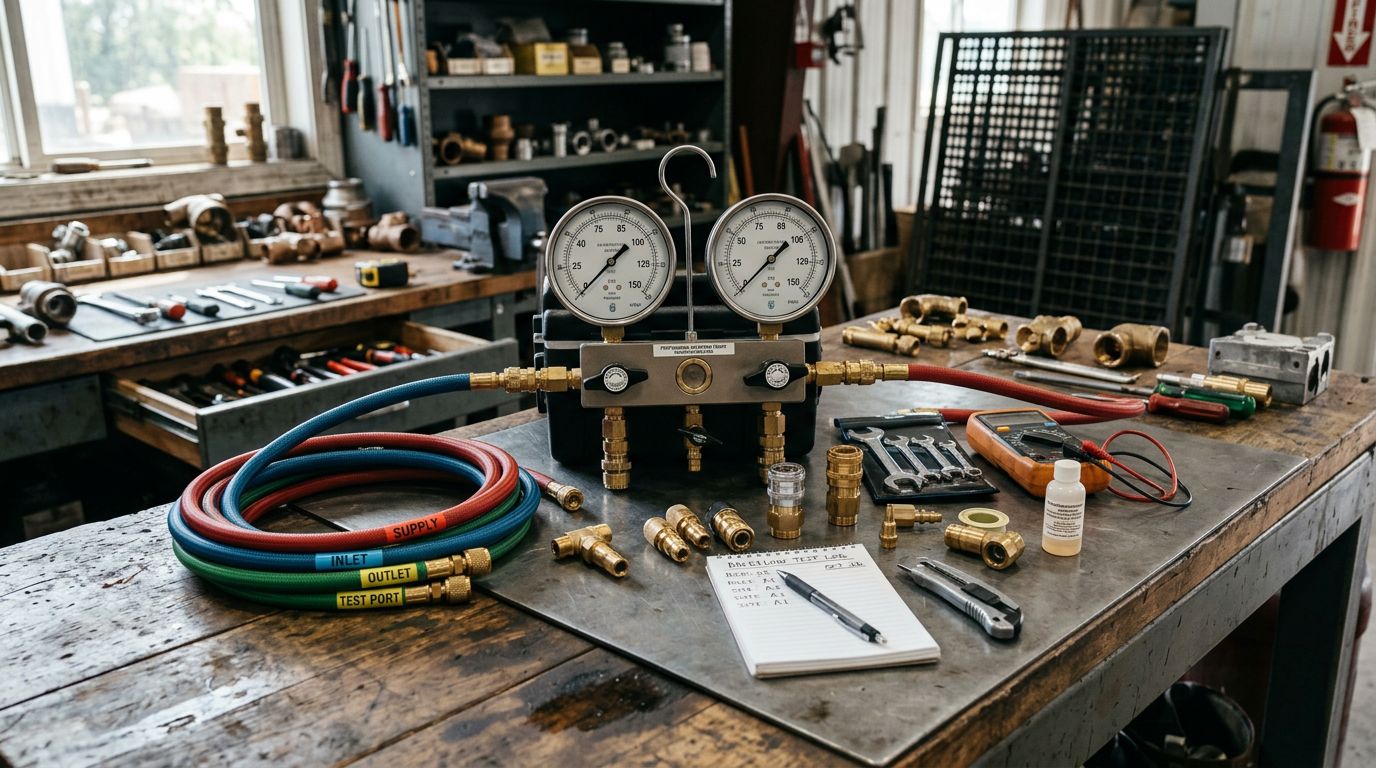
- Test cock fittings and hoses: Connect the gauge to the assembly.
- Bleed valves: Release air and control water flow during the test.
- Needle valves: Fine-tune pressure readings for accuracy.
- Fittings and adapters: Match different assembly sizes and brands.
Together, these parts let a certified tester verify that an assembly meets code. A clean pass means the water stays safe. A fail means repairs are needed before the assembly can protect anyone.
Essential Backflow Testing Tools Every Technician Needs
Not every tool is glamorous, but each one plays a role. Here are the must-haves we rely on for every job. Learn more about our full range of services on our backflow testing in Texas page.
Differential Pressure Test Kit
This is the star of the show. A good test kit gives clear, stable readings even when field conditions are less than perfect. Most modern kits come in analog or digital versions. Digital models reduce guesswork, while analog gauges are tough and easy to service.
Test Cock Adapters and Fittings
Backflow assemblies come in many sizes. Having a range of adapters means you can connect to any valve without hassle. Brass fittings hold up well against wear and corrosion.
Bleed and Needle Valve Assembly
These small valves control water flow during the test. Smooth, precise valves make it easier to catch subtle pressure changes. Sticky valves lead to sloppy readings.
Calibration Kit
Accuracy fades over time. A calibration kit lets you verify your gauge against a known standard. This keeps your reports credible and code-compliant.
Hand Tools and Wrenches
You will need adjustable wrenches, screwdrivers, and pliers to open test cocks and adjust fittings. A rugged tool bag keeps everything organized on the road.
Documentation and Reporting Tools
Whether it is a tablet or a paper form, you need a reliable way to record results. Clean records matter for both customers and local water authorities.
How to Choose the Right Backflow Test Kit
Picking the right kit depends on the type of work you do and how often you test. A commercial technician needs durability and speed. A residential specialist may want a lighter, simpler setup. Our team handles both, so we know the tradeoffs. If you want to see how a typical home inspection unfolds, check out our overview of the residential backflow testing process in Texas.
- Match the kit to your workload. High-volume testers benefit from fast, repeatable digital gauges. Occasional testers can stick with a solid analog unit.
- Check accuracy specs. Look for a gauge with a tight tolerance rating. The smaller the margin of error, the better.
- Consider durability. Field work is rough. Choose brass fittings and a protective case that can take a beating.
- Look at calibration options. Some kits are easy to calibrate in-house. Others require a lab. Factor in the cost and downtime.
- Verify compatibility. Make sure the kit includes adapters for the assembly types common in your area.
- Weigh portability. A lighter kit saves your back across a full day of stops.
- Read the warranty. A strong warranty signals a manufacturer that stands behind the tool.
Do not just chase the lowest price. A cheap gauge that fails calibration costs more in redo visits and lost trust. Buy once, buy right.
Best Backflow Testing Equipment Brands in 2026
The market has several trusted names. Each brings something a little different to the table. Here is a look at the brands technicians talk about most this year.
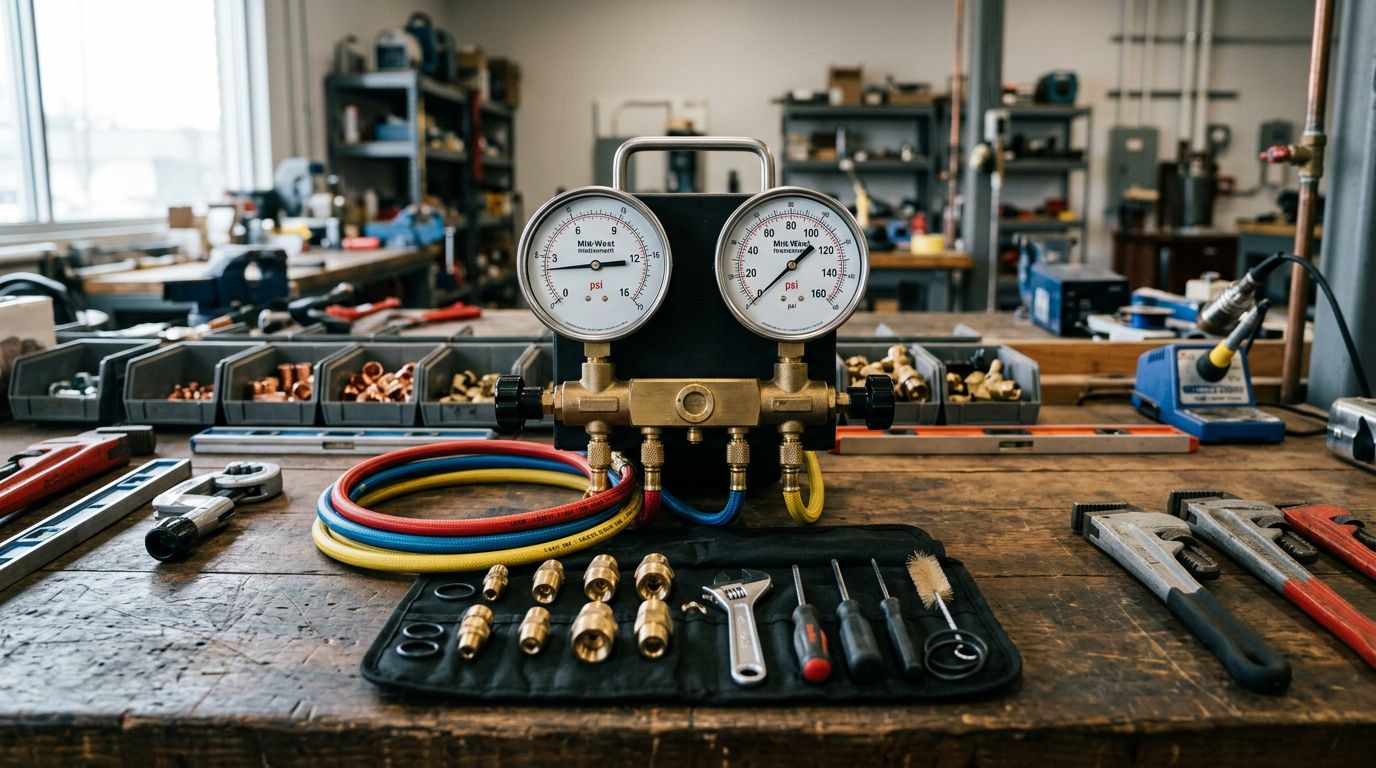
Mid-West Instrument
A longtime favorite for analog gauges. Their kits are known for rugged build quality and reliable readings. Parts and repair support are easy to find.
Watts
Watts makes both preventers and test equipment, so their kits pair well with common assemblies. Their gauges are simple to use and widely respected.
Zurn Wilkins
Popular for both hardware and testing tools. Technicians like the smooth valve action and clean, readable dials.
Ames
Ames focuses on durable field equipment. Their kits hold up well in tough conditions and stay accurate over long service life.
Febco
A trusted name in the water safety industry. Their test kits are straightforward and pair nicely with their assembly lineup.
The BEST brand is the one that fits your routine, your budget, and the assemblies you service most. Many pros keep more than one gauge on hand as a backup.
How to Calibrate and Maintain Your Backflow Test Gauge
A gauge is only as good as its last calibration. Water authorities often require annual calibration, and for good reason. An out-of-spec gauge can pass a bad assembly or fail a good one. Both outcomes hurt your reputation. Here is how we keep our gear sharp.
- Calibrate on schedule. Most standards call for calibration at least once a year. Mark the date and stick to it.
- Use a certified reference standard. Compare your gauge against a known, traceable source. Do not eyeball it.
- Inspect hoses and fittings. Check for cracks, leaks, and worn threads before each job. Replace tired parts early.
- Flush the kit after use. Debris and mineral buildup can clog valves. A quick rinse keeps things smooth.
- Store it properly. Keep the kit in its case, away from extreme heat and cold. Temperature swings can affect accuracy.
- Log every calibration. Keep a record of dates and results. This paper trail protects you if a reading is ever questioned.
- Test the bleed valves. Make sure they open and close cleanly. Sticky valves throw off differential readings.
A little routine care goes a long way. A well-maintained gauge stays accurate and saves you from surprise failures in the field.
Common Backflow Testing Equipment Mistakes to Avoid
Even experienced testers slip up now and then. The good news is that most mistakes are easy to prevent once you know what to watch for. Here are the pitfalls we coach our team to avoid.
- Skipping calibration. An overdue gauge gives readings you cannot trust. This is the number one mistake.
- Ignoring air in the lines. Trapped air skews pressure readings. Always bleed the system before recording numbers.
- Using the wrong adapters. A loose or mismatched fitting causes leaks and false failures.
- Rushing the test sequence. Opening and closing test cocks in the wrong order gives useless data. Slow down and follow the steps.
- Neglecting hose inspection. A cracked hose leaks pressure and ruins the test. Check before you connect.
- Poor record keeping. Sloppy reports create problems with water authorities and customers alike.
- Testing in extreme cold. Freezing conditions can affect both the assembly and the gauge. Time your work wisely.
Avoid these traps and your results stay accurate. Accurate results build trust with every customer from Round Rock to San Marcos.
Conclusion
Good backflow testing equipment is more than a set of tools. It is what keeps drinking water safe across Austin and the surrounding communities. From a reliable differential pressure gauge to solid fittings and a steady calibration routine, every piece matters. Choose gear that fits your workload, keep it maintained, and steer clear of the common mistakes we covered.
At Safewater Backflow And Irrigation, we bring the right tools and the right care to every residential and commercial job. If your property needs a professional backflow test done right, reach out to our team and let us help protect your water supply.