
Backflow Testing Certification Requirements (2026 Complete Guide)
If you work with backflow prevention devices, or you own a property that has one, you have probably heard about backflow testing certification. It is one of those requirements that sounds complicated at first but makes a lot more sense once you break it down. Here at Safewater Backflow And Irrigation in Austin, we deal with backflow testing every single day, and we know how confusing the certification rules can feel.
This 2026 guide walks you through the whole picture. We cover what certification is, how to get it, what it costs, how often you renew, and the mistakes that trip people up. Whether you are a tester in training or just a curious property owner, this one is for you.
What Is Backflow Testing Certification and Why Is It Required
Backflow testing certification is an official credential that proves a person is qualified to test and inspect backflow prevention assemblies. These devices keep dirty or contaminated water from flowing backward into the clean drinking water supply. That reverse flow can happen when pressure in the system changes suddenly. A certified tester knows how to check that the device is working the way it should.
Certification matters because backflow is a real public health risk. Contaminated water can carry chemicals, bacteria, and other nasty stuff. Local water authorities require certified testing so they know the person doing the work actually understands the equipment. You can learn more about how backflow preventers protect drinking water and why testing is so important.
- It confirms the tester understands device mechanics and testing procedures.
- It protects the public drinking water supply from contamination.
- It satisfies local, state, and municipal code requirements.
- It gives property owners peace of mind that the work is legitimate.
- It is often REQUIRED before a water utility will accept a test report.
- It reduces liability for both the tester and the property owner.
How to Get Backflow Testing Certified in 2026
Getting certified is not as hard as people think, but it does take real effort. Most programs mix classroom learning with hands-on training on actual devices. You will need to pass both a written exam and a practical test where you demonstrate that you can test a device correctly. Here is the general path most people follow in 2026.
- Check your local requirements. Rules vary by state and water district, so find out what your area accepts before you enroll anywhere.
- Choose an approved training provider. Look for a program recognized by your state or a national body. Not all courses are accepted everywhere.
- Complete the coursework. This usually runs a few days and covers device types, hydraulics, cross connections, and testing steps.
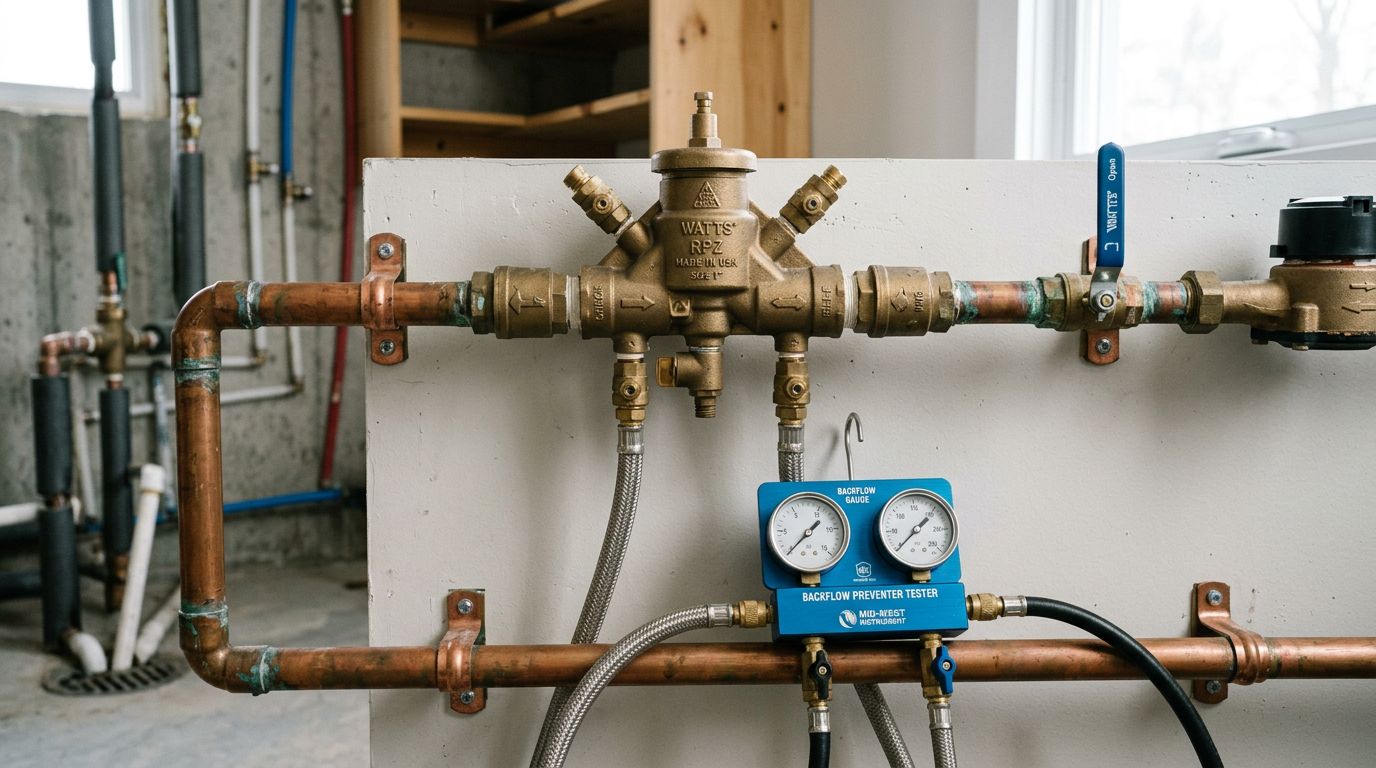
- Get hands-on practice. You will work with real assemblies and learn to use test gauges properly.
- Pass the written exam. This tests your knowledge of theory, safety, and code rules.
- Pass the practical exam. You demonstrate a complete, accurate test in front of a proctor.
- Register with your local water authority. Some areas need you to file your certification before you can submit reports.
If you want to see how testing works in practice around Central Texas, our overview of backflow testing in Texas gives you a clear look at the process from start to finish.
Backflow Certification Requirements by State
Certification rules are not the same everywhere. Each state sets its own standards, and sometimes individual cities add their own layer on top. Below we break down a few examples to show how much things can vary. Always confirm the current rules with your local water district because they update over time.
Texas Certification Requirements
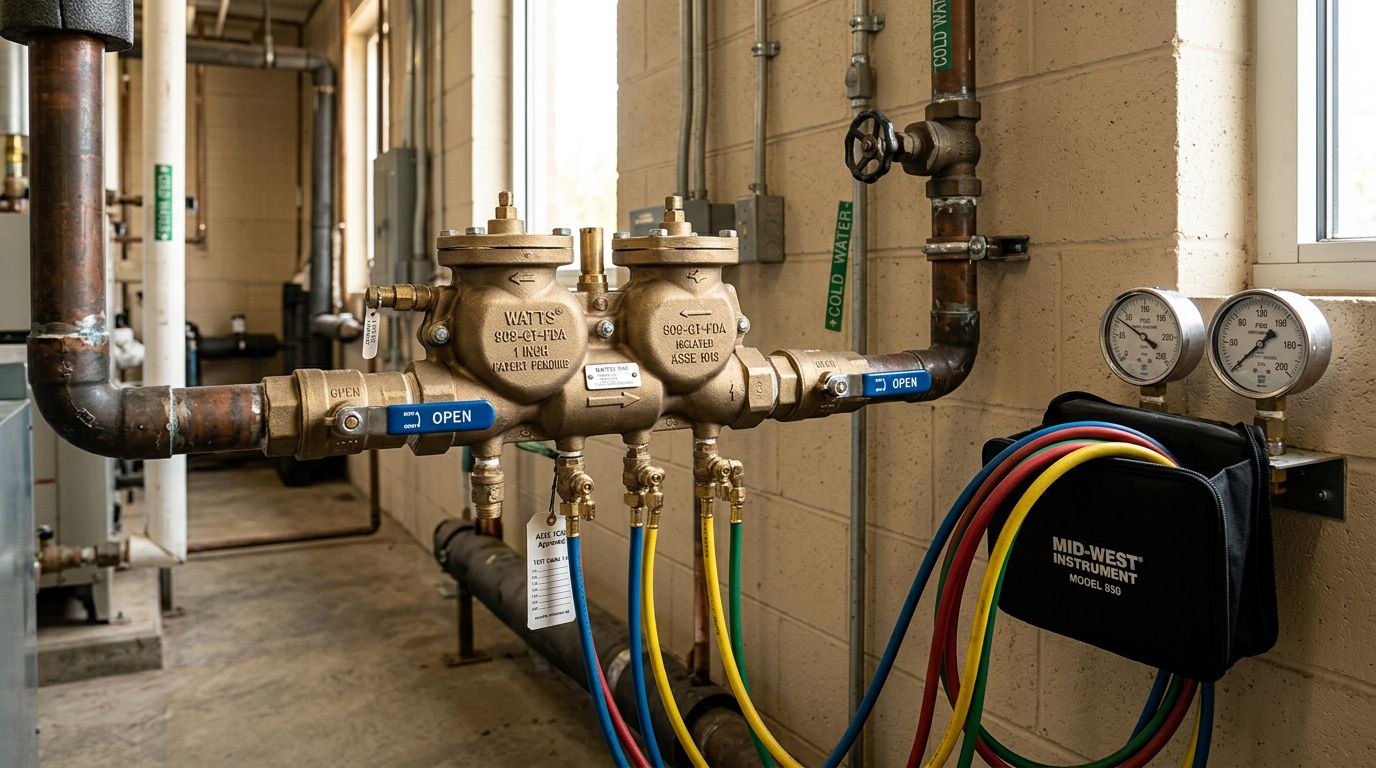
In Texas, backflow testers are typically licensed through the state environmental agency. Testers must complete approved training and pass exams. Many cities in the Austin area, including Round Rock, Cedar Park, and Georgetown, also require testers to register locally before submitting reports. Renewal and continuing education are part of keeping that credential active.
California Certification Requirements
California often uses certification programs tied to recognized organizations like AWWA or ABPA. Testers usually recertify every year or two, and hands-on skill checks are common at renewal. Water districts in California tend to be strict about accepted certifying bodies.
Florida Certification Requirements
Florida also leans on national certification programs. Testers must show proof of an approved course and passing exam scores. Local utilities frequently maintain their own approved tester lists, so registration at the city level is common.
Other States
Many states follow a similar pattern; approved training, a written test, a practical test, and periodic renewal. The biggest differences are which certifying bodies are accepted and how often you must renew. If you move or work across state lines, do not assume your certification transfers automatically. Check first.
How Much Does Backflow Certification Cost
Cost is one of the first things people ask about. The total depends on your location, the training provider, and whether you already own testing equipment. Certification is an investment, but for professionals it usually pays for itself quickly once you start booking test jobs. Here is a general breakdown of what to expect in 2026.
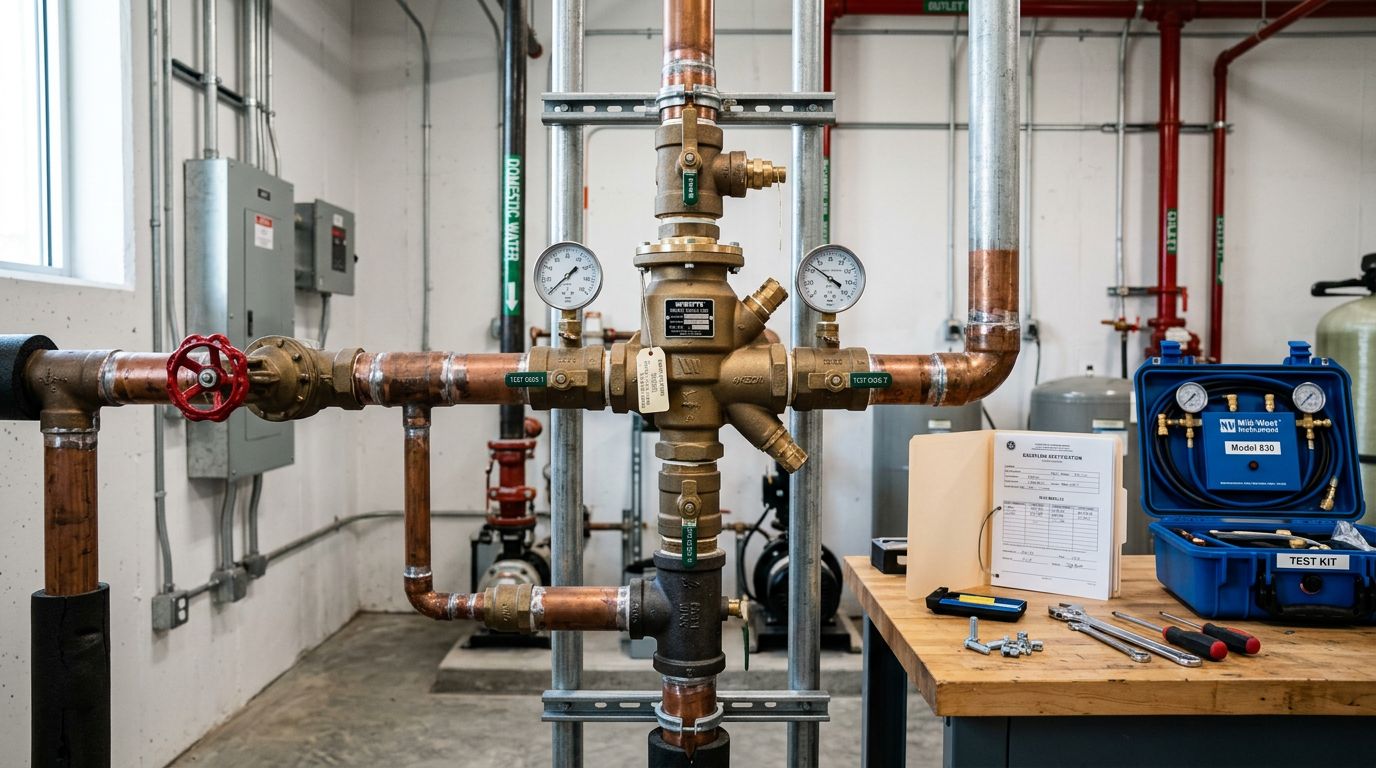
- Training course: Often in the range of a few hundred to around a thousand dollars depending on length and provider.
- Exam fees: Written and practical exams may carry separate charges.
- Test gauge equipment: A quality test kit is a significant one-time cost, sometimes several hundred dollars or more.
- Registration fees: Some cities or water districts charge to add you to their approved tester list.
- Renewal and continuing education: Budget for recurring costs when your certification comes up for renewal.
For property owners rather than testers, the cost is different. You are paying for the test itself, not the credential. If you want to understand what goes into a home visit, our guide to the residential backflow testing process in Texas explains what happens step by step.
How Often Do You Need to Renew Backflow Certification
Certification does not last forever. Renewal keeps your skills sharp and makes sure you stay current with code changes. Most programs require renewal on a set schedule, and letting it lapse can mean starting over or paying extra fees. Here is how the renewal cycle usually works.
- Know your expiration date. Many certifications last one to three years depending on the issuing body.
- Complete any required refresher training. Some renewals ask for a short course or continuing education hours.
- Retake the practical exam if required. Certain programs want you to prove your hands-on skills again.
- Pay the renewal fee. This is usually less than the original certification cost.
- Recalibrate your test gauge. Many authorities require gauge calibration on a regular schedule, often yearly.
- Update your registration. Make sure your local water district has your current credential on file.
Do not wait until the last minute. We always tell people to start the renewal process weeks before the deadline so there is no gap in their ability to work.
Common Backflow Testing Certification Mistakes to Avoid
We have seen plenty of testers and property owners run into avoidable problems. A little planning goes a long way. Knowing these common mistakes ahead of time can save you money, time, and a lot of frustration. Here are the ones that come up most often.
- Choosing an unapproved training provider. Always verify the course is accepted in your area BEFORE you pay.
- Letting certification lapse. An expired credential can force you to redo the whole process.
- Skipping gauge calibration. An uncalibrated gauge produces inaccurate results and can invalidate your reports.
- Forgetting local registration. State certification alone may not be enough if your city keeps its own tester list.
- Ignoring continuing education. Codes and devices change, and staying current is part of the job.
- Rushing the practical exam. Sloppy technique during testing leads to failed exams and failed field tests.
- Assuming certification transfers between states. It often does not, so confirm the rules if you relocate.
Whether you are handling residential work, commercial buildings, fire hydrant inspections, or customer service inspections, avoiding these mistakes keeps your operation smooth and compliant.
Conclusion
Backflow testing certification is all about protecting clean drinking water and proving you know how to do the job right. To recap, certification requires approved training, written and practical exams, and periodic renewal. Costs vary based on training and equipment, and rules change from state to state and even city to city. Avoid the common mistakes and you will keep your credential in good standing.
If you own a property in Austin, Round Rock, Cedar Park, Georgetown, Kyle, San Marcos, Pflugerville, Leander, or the surrounding areas and you need reliable backflow testing, our team at Safewater Backflow And Irrigation is here to help. Reach out and let us take care of your testing needs so you can stay compliant and worry free.