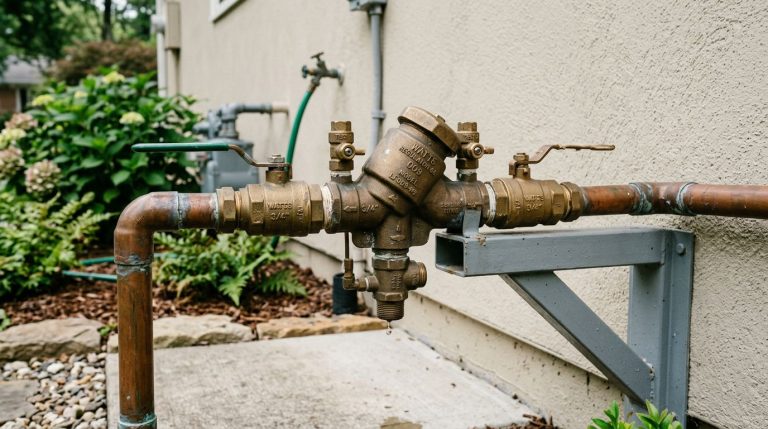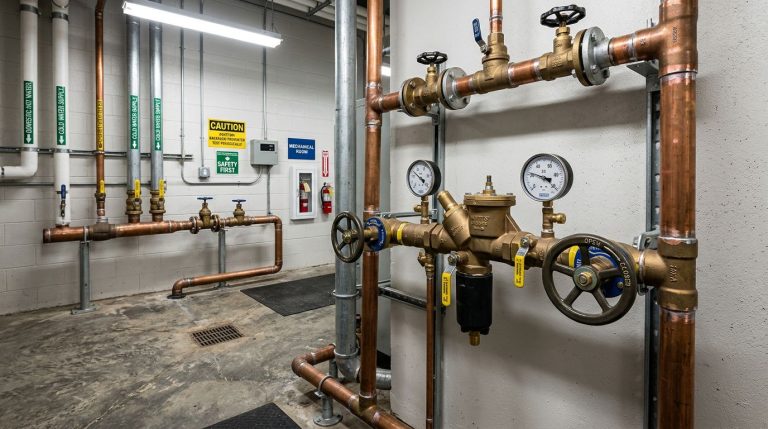

Backflow Prevention Device Failing Signs (Warning Guide 2026)
A backflow prevention device is one of those things you never think about until it stops working. When it fails, your clean drinking water can get mixed with contaminated water, and that is a serious health risk. Knowing the backflow prevention device failing signs early can save you money, headaches, and possible compliance fines. At Safewater Backflow And Irrigation in Austin, we test and inspect these devices every day, so we know exactly what to look for.
In this 2026 warning guide, we will walk you through the common signs of trouble, what causes failure, how to test your device, and when it makes sense to repair or replace it. Let us help you keep your water safe and your property up to code.
What Are the Common Signs of a Failing Backflow Prevention Device
Backflow preventers work quietly in the background, but they DO give you clues when something goes wrong. Some signs are obvious, like water leaking everywhere. Others are subtle and easy to miss. If you know what to watch for, you can catch a problem before it turns into a full failure. A working backflow device is the barrier between your drinking water and the outside world, and you can learn more about how backflow preventers protect drinking water to understand why these signs matter so much.
Here are the warning signs we run into most often:
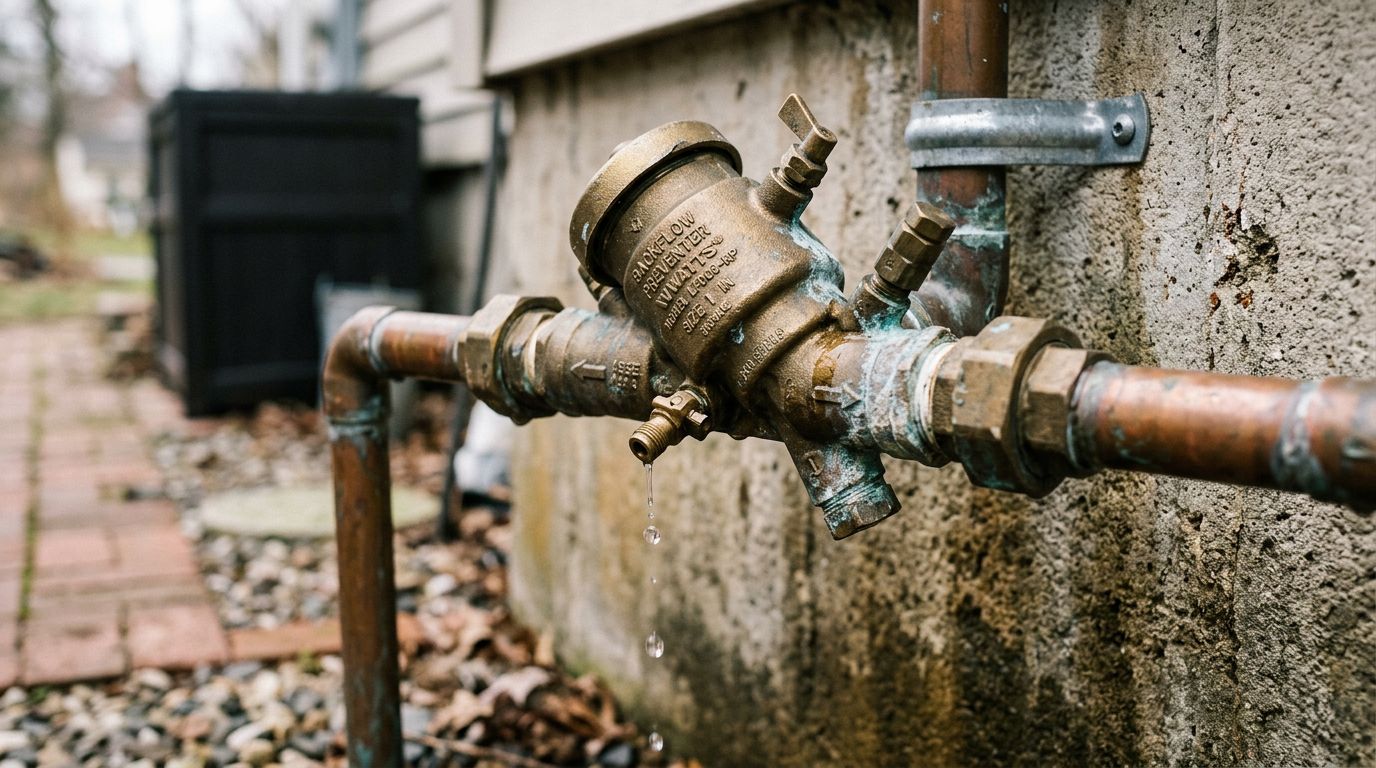
- Water leaking from the device – continuous dripping or spraying usually means a valve or seal has failed.
- Discolored water – brown, yellow, or cloudy water coming from your taps can point to backflow contamination.
- Odd taste or smell – a metallic, chemical, or sulfur odor is a red flag.
- Low water pressure – a stuck or clogged valve can restrict flow throughout your property.
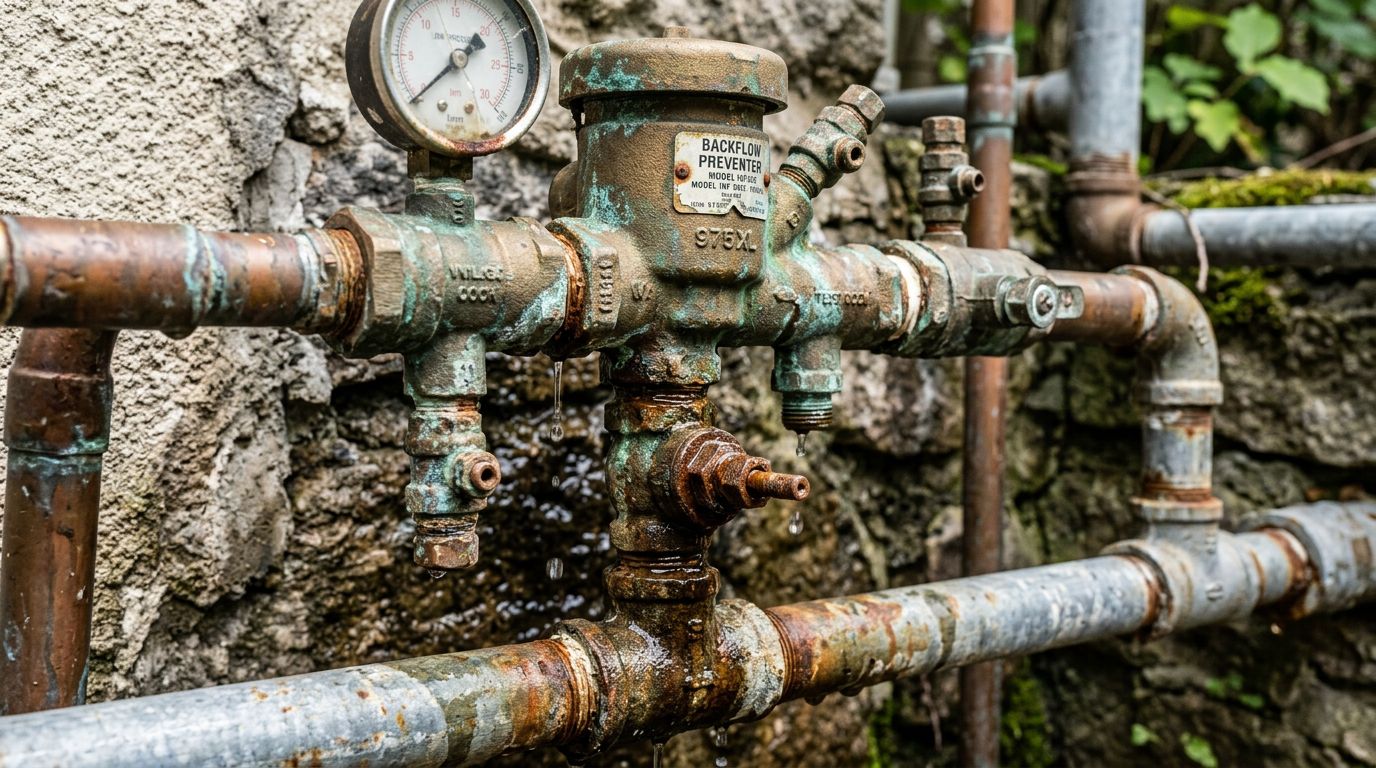
- Visible corrosion or rust – buildup on the device body or fittings weakens the whole system.
- Constant relief valve discharge – if the relief valve keeps dumping water, internal parts are likely worn out.
- Failed annual test – the clearest sign of all, an official test result that shows the device is not holding pressure.
If you notice ANY of these, do not wait. A failing device can allow dirty water to flow backward into your clean supply, and that is a problem you want handled fast.
What Causes Backflow Preventers to Fail
Backflow devices are built to last, but they are not indestructible. Several things can wear them down over time. Understanding these causes helps you spot trouble early and plan for maintenance.
Age and Normal Wear
Rubber seals, springs, and check valves degrade with age. After years of use, the internal parts simply do not seal as tightly as they once did. This is the most common reason older devices start to fail their tests.
Debris and Sediment Buildup
Dirt, sand, and mineral deposits from your water supply can collect inside the device. This debris keeps valves from closing fully, which lets water pass in the wrong direction. Areas with harder water tend to see this more often.
Freezing Temperatures
Central Texas gets cold snaps, and an unprotected device can freeze. When water inside expands, it cracks the housing and damages internal components. We see a spike in failures after hard freezes across Austin and surrounding towns.
Improper Installation
A device installed at the wrong height, angle, or location will not perform correctly. Poor installation also makes the unit more vulnerable to damage and harder to test properly.
Physical Damage and Corrosion
Lawn equipment, vehicles, and even vandalism can crack or bend a device. Corrosion from moisture and chemicals slowly eats away at metal parts until they fail. Regular backflow testing in Texas helps catch this kind of damage before it becomes dangerous.
Pressure Fluctuations
Sudden pressure changes in the water main put stress on the check valves. Over time, these surges wear out the sealing surfaces and lead to leaks or backflow.
How to Test a Backflow Prevention Device for Problems
Testing a backflow device the right way requires a certified tester and specialized gauges. That said, you can do a basic visual check yourself to spot obvious issues between professional tests. A full test measures whether the check valves and relief valve hold pressure the way they should. Here is a general look at how the process works.
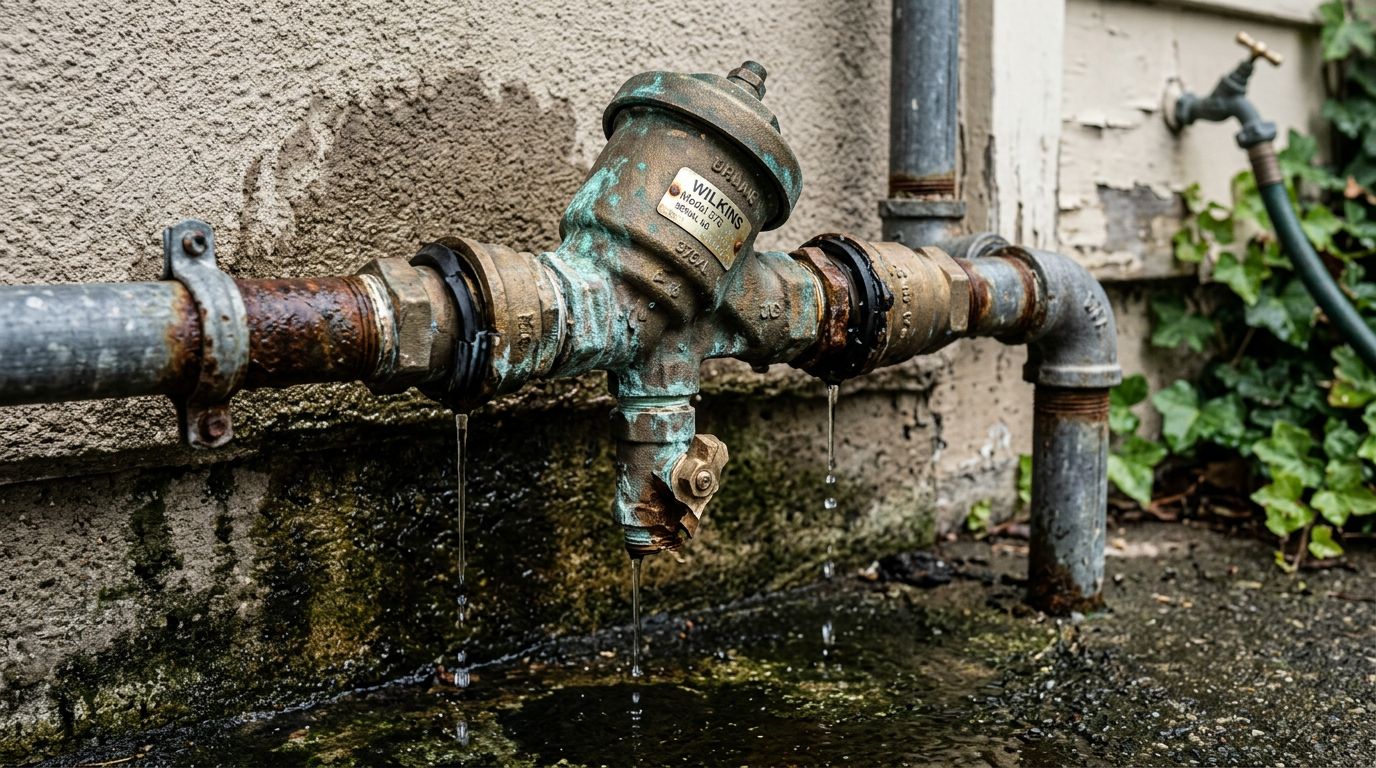
- Do a visual inspection first. Look for leaks, corrosion, cracks, or water pooling around the device. Note anything that looks off.
- Check for relief valve discharge. If the relief valve is constantly dripping or dumping water, that is a sign of internal failure.
- Shut off the downstream valve. A certified tester isolates the device before attaching test equipment.
- Attach the test gauge. The tester connects a calibrated gauge to the test cocks on the device.
- Measure the check valves. Each check valve is tested to confirm it holds a minimum pressure difference and closes tight.
- Test the relief valve. On a reduced pressure device, the tester checks that the relief valve opens at the correct pressure.
- Record the results. The findings are documented and, if required, submitted to your local water authority.
For homeowners who want to understand what a professional visit looks like, our overview of the residential backflow testing process in Texas breaks it all down step by step. A professional test is the only way to know for sure that your device passes code requirements.
When Should You Repair vs Replace a Failing Backflow Preventer
Not every failing device needs to be thrown out. Sometimes a simple repair kit brings it back to full working order. Other times, replacement is the smarter and safer choice. The right call depends on the age of the device, the type of damage, and the long-term cost. Here is how we help customers decide.
- Repair makes sense when: the device is relatively new, only a seal or spring has worn out, parts are still available, and the housing is in good shape.
- Repair also works well when: the failure was caused by debris that can be cleaned out and the internal components are otherwise sound.
- Replace when: the device is old and repair parts are discontinued or hard to find.
- Replace when: the housing is cracked from freezing or physical damage, since no repair kit fixes a broken body.
- Replace when: the device fails repeatedly even after repairs, which usually means it is at the end of its life.
- Replace when: the cost of repair gets close to the cost of a new unit. At that point, a new device is the better value.
Our technicians always give you an honest assessment. We would rather save you money with a repair when it is possible than push a replacement you do not need.
How Much Does Backflow Preventer Repair or Replacement Cost
Cost is one of the first questions people ask, and it is a fair one. Prices vary based on the size of the device, the type of backflow preventer, and how much labor the job takes. A small residential repair costs far less than replacing a large commercial unit. Below is a general range to help you set expectations. Keep in mind these are estimates and your actual price depends on your specific setup.
- Annual backflow test: a routine test is the most affordable service and often catches problems before they become expensive.
- Minor repairs: replacing seals, springs, or a rubber diaphragm falls on the lower end of the cost scale.
- Major repairs: rebuilding multiple internal components or replacing check valves costs more due to added parts and labor.
- Residential replacement: swapping out a standard home device is a mid-range expense that includes the new unit and installation.
- Commercial replacement: larger devices with bigger pipe diameters sit at the top of the cost range because they require more materials and time.
- Emergency service: repairs outside normal hours or after a freeze may carry higher rates due to urgency.
The smartest way to control costs is regular testing and maintenance. Catching a small issue early almost always beats paying for a full replacement later.
How to Prevent Backflow Device Failure and Maintain Compliance
Prevention is far cheaper than repair, and it keeps you compliant with local rules. A little routine care goes a long way toward extending the life of your device. Here are the habits that make the biggest difference.
Schedule Annual Testing
Most water authorities in the Austin area require yearly testing. Staying on schedule keeps you compliant and gives a certified tester the chance to catch small problems before they grow. We serve customers across Round Rock, Cedar Park, Georgetown, Pflugerville, and beyond, so annual testing is easy to keep up with.
Protect the Device From Freezing
Insulate your backflow preventer before winter hits. Insulation covers, pouches, or a simple wrap can prevent the cracked housings we see every cold season. This one step saves a lot of homeowners from surprise replacements.
Keep the Area Clear
Make sure nothing blocks or crowds the device. Trim back plants, keep lawn equipment away, and avoid stacking anything on top of it. Clear access also makes testing faster and reduces the risk of accidental damage.
Address Water Quality Issues
If you have hard water or a lot of sediment, consider filtration upstream. Cleaner water means less debris buildup inside the valves and fewer clogs over time.
Fix Small Problems Right Away
A minor leak or a slightly worn seal will not fix itself. Handling small repairs quickly stops them from turning into major failures. Do not put off what a quick service call can solve.
Keep Good Records
Hold on to your test reports and repair receipts. Documentation proves compliance if your water authority asks, and it helps track the device’s history so you know when replacement is coming.
Conclusion
Your backflow prevention device is a small piece of equipment with a HUGE job: protecting your drinking water. Watch for warning signs like leaks, discolored water, low pressure, and constant relief valve discharge. Know that age, debris, freezing, and corrosion are the usual culprits behind failure. When trouble shows up, a certified test tells you whether a repair or a full replacement is the right move.
The best defense is regular testing and simple maintenance. If you are in Austin, Kyle, San Marcos, Leander, West Lake Hills, or any of the surrounding communities, the team at Safewater Backflow And Irrigation is ready to help you stay safe and compliant. Schedule your inspection today and keep your water protected all year long.